


What helps a headache - Headaches are not your destiny! Headache is the second most common pain…


Headache is the second most common pain after back pain. Both children and adults experience headaches. Most headaches are temporary and harmless. Simple painkillers help relieve the symptoms.
Migraine, severe chronic headaches, and headaches that are a sign of a serious illness require special treatment.
Around 220 different types of headache have been identified. Tension-type headache, the most common form of headache, and migraine are among the most frequently seen.
Primary headaches have no identifiable cause but can be triggered by factors such as stress, dehydration, prolonged screen time, and smoking. Secondary headaches, on the other hand, are caused by certain illnesses (for example hypertension, infections, sinusitis), trauma (particularly trauma to the head area), medication use, or withdrawal from a long-used medication.
A doctor should be consulted for headaches that last for weeks, are accompanied by complaints such as nausea, vomiting, fever, or neck stiffness, that occur after a head injury, that begin suddenly, or that are accompanied by visual disturbance, hearing loss, and sensitivity to sound.
Diagnosis is made by taking a medical history, performing a physical and neurological examination, blood tests, imaging methods, and cerebrospinal fluid analysis, along with evaluation by an ophthalmologist, neurologist, dentist, neural therapy and regulation medicine physician, or ENT specialist.
Depending on the type and severity of the headache, medications (such as painkillers), neural therapy, regulation medicine and complementary medicine approaches (for example acupuncture, manual medicine, manual therapy, phytotherapy, homeopathy), psychotherapeutic approaches, exercise, and stress-reduction methods are used in treatment.
Healthy and balanced nutrition, quality and sufficient sleep, drinking enough water, avoiding alcohol and nicotine, reducing coffee consumption, regular exercise, correct breathing techniques, stress management, and relaxation exercises are effective in preventing headaches.
A CLOSER LOOK AT HEADACHES
Headaches can begin slowly or suddenly. They can be dull, piercing, and of varying intensity. While a mild headache is tolerable for some people, others can hardly get relief from their headaches and come to accept this chronic pain as part of life.
Headaches are more common in women. While women complain of migraine-like headaches more often, men experience cluster headaches more frequently.
TENSION-TYPE HEADACHE
Tension-type headache can be mild, moderate, or severe. The intensity of tension-type headaches increases gradually. The pain starts at the nape of the neck and appears on both sides of the head; it can affect specific areas such as the forehead, temples, or crown.
Tension-type headaches are dull and press on the skull like a tight helmet. The pain lasts anywhere from half an hour to several days.
Tension headache is the most common type of headache. Tension-type headache increases due to epigenetic and environmental factors. It is a severe headache that arises from continuous tension of the face, head, and neck muscles as a result of emotional strain such as excessive responsibility, disappointment, and financial or family problems.
MIGRAINE HEADACHE
Migraine can occur an average of 1-6 times a month. A migraine attack usually lasts 4-72 hours. It usually starts gradually and on one side, and can later spread to the other side.
Migraine pain is described as throbbing in the head area and is usually felt as moderate to severe. Nausea, vomiting, and sensitivity to noise or light often accompany the headache. 10-15% of all migraine patients experience an aura before the pain attack, which can be accompanied by visual and auditory disturbances such as flashing lines of light before the eyes, tingling in the arms and legs, and difficulty finding words.
Migraine and tension-type headaches can occur together.
MEDICATION-OVERUSE HEADACHE
We observe that people who frequently use certain medications, especially painkillers, tend to be prone to headaches. Medication-overuse headache is a moderate to severe pain that occurs on both sides of the head. It is rarely accompanied by nausea or vomiting.
A vicious cycle often forms: a painkiller is taken due to a headache, but the pain does not decrease and may even intensify, and this increase causes the person concern. Since the person does not think it is a medication-overuse headache, they increase the medication dose each time.
Symptoms that accompany headache:
Nausea, vomiting, sensitivity to noise and light, visual disturbances, anxiety, sleep disorders, fatigue, worry, or depression can accompany headaches.
CLUSTER HEADACHE
Cluster headaches are very severe pains that start on one side, from behind and around the eye. They are often accompanied by symptoms such as tearing, redness, and swelling of the eye, edema, and nasal congestion.
Cluster headaches intensify within a few minutes and usually last between 15 minutes and three hours.
The exact cause of these headaches is not fully known, but they can be triggered by alcohol, cigarette smoke, or excessive light exposure.
CAUSES OF HEADACHE
Despite intensive research, how headaches occur has not been clearly determined.
Primary headaches can be triggered by various factors:
-
 Stress
 -
Insufficient water intake
-
Poorly ventilated environments
-
Prolonged time in front of a computer
-
Weather changes
-
Irregular sleep
-
Smoking
-
Alcohol
-
Hormonal imbalance in women
Secondary headaches are always related to an underlying illness. The most common causes are:
-
Injuries to the head and cervical spine
-
Inflammation: meningitis, encephalitis, temporal arteritis (inflammation of the temporal arteries), sinusitis, gum and dental root infections
-
Flu - viral infections
-
Bronchial asthma, COPD, chronic bronchitis
-
Hypertension
-
Myofascial trigger points
-
Neck muscle tension
-
Low blood sugar in diabetes
-
Facial neuralgia
-
Shingles
-
Costen syndrome
-
Heat and cold shock
-
Acute glaucoma
-
Brain aneurysm
-
Stroke (ischemic stroke or brain hemorrhage)
-
Brain or cervical spine tumors
-
Allergies caused by the consumption of certain foods, such as glutamate
-
Food sensitivities
-
Nitrates found in foods
-
Birth control pills
-
Withdrawal syndrome
-
Interference fields
WHEN SHOULD YOU SEE A DOCTOR FOR A HEADACHE?
If you rarely experience headaches, if they are tolerable, and if the pain does not last long, mild painkillers are generally helpful. If this pain is negatively affecting your life, you should consult a doctor who practices regulation medicine and neural therapy without wasting time.
If the headache appeared suddenly and is very severe, it may be a warning sign of an acute, life-threatening condition in the brain. It is especially important to see a neurologist without delay if it is accompanied by other symptoms such as visual, hearing, or speech disturbances, weakness, confusion, clouding of consciousness, or loss of consciousness.
HEADACHE IN CHILDREN
Children and adolescents experience headaches just as often as adults do. Tension-type headache and migraine are the most common types of headache seen in these age groups. However, since it is often difficult to assess pain in children, it is always advisable to consult a doctor.
HEADACHE DURING PREGNANCY
Migraine is less common during pregnancy. In pregnant women, especially in the last two trimesters, the frequency of migraine decreases. The situation is different in early pregnancy, however. Hormonal changes in the first few months increase susceptibility to simple headache attacks. Preeclampsia, the condition we refer to as pregnancy poisoning that can cause headaches during pregnancy, is rare.
To avoid putting your baby at risk, you should consult your doctor before using painkillers. Neural therapy, manual therapy, and acupuncture can be safely used for headaches and other pain that arise during pregnancy. Neural therapy in particular is very beneficial in such cases. Neural therapy is widely used during pregnancy in Germany, Switzerland, and Austria. The most commonly recommended painkillers during pregnancy are those containing paracetamol. Anti-rheumatic drugs such as acetylsalicylic acid, ibuprofen, diclofenac, and similar medications should not be used during pregnancy.
For headaches in pregnant women, aromatic products (such as peppermint oil applied to the temples), relaxation exercises, and light movement in fresh air are recommended.
CONVENTIONAL MEDICATION TREATMENT FOR HEADACHE
There are several medications used for different types of headache.
The following medications can relieve tension-type headaches:
-
Acetylsalicylic acid (ASA)
-
Ibuprofen
-
Naproxen
-
Paracetamol
-
Combination preparations of acetylsalicylic acid, paracetamol, and caffeine
-
Antidepressants
You should consult your doctor about choosing the appropriate painkiller and dosage.
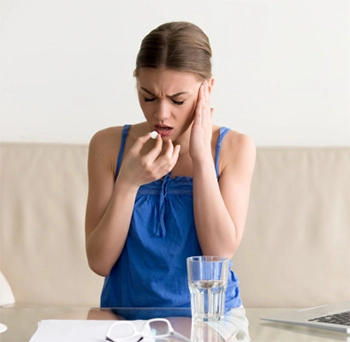 Do not use painkillers unless necessary. Excessive use of painkillers can lead to dependency, and the risk of medication-overuse headache increases.
However, in my personal experience, medication treatment often does not produce results. Each time, an increase in the medication dose becomes necessary.
Neural therapy is a highly effective treatment for migraine, tension-type, and cluster headaches.
In my personal experience, in addition to the causes described in modern medicine, myofascial trigger points in the muscles — commonly known as "muscle knots" — play a fairly significant role in tension-type headache. Headaches can have many different causes, such as a dysfunction originating from the cervical spine, facet joint locking, temporomandibular joint disorders, and an interference field inside the mouth.
The combination of neural therapy and manual therapy is quite effective in combating tension-type headache. In addition, acupuncture can speed up the response to treatment.
In addition to the classification of migraine in modern medicine, there are different subgroups from the perspective of holistic medicine, regulation medicine, neural therapy, and acupuncture.
Whatever the type of migraine, it is possible to reduce the pain with neural therapy. You can find qualified neural therapy physicians in Turkey by visiting the website www.noralterapi.com.
Sources Used:
• Nazlikul, H: Neural Therapy Textbook
• Nazlikul, H: Neural Therapy - Another Treatment Is Possible
• H. Barop's (Translator H. Nazlikul) Atlas of Neural Therapy
• L. Fischer's (Translator H. Nazlikul and Y. Tamam) Neural Therapy Book
• James W. McNabb (Translator H. Nazlikul and Y. Tamam) Joint and Soft Tissue Injections
• Weinschenk, S: Neuraltherapie
• Fischer, L et al: Lehrbuch Integrative Schmerztherapie