


Fibromyalgia and Neural Therapy: An Effective Solution Get Rid of Fibromyalgia with Neural Therapy

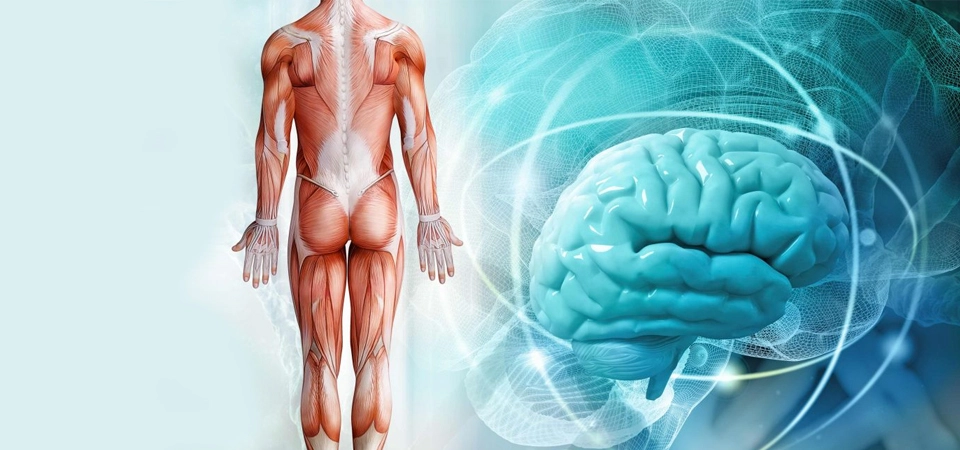
From the perspective of Regulation Medicine, we recognize a number of different causes that can lead to the development of fibromyalgia.
The complaint that is at the forefront in fibromyalgia is widespread pain. The complaints experienced by each patient are different. In addition to widespread pain, sleep disorders, anxiety, and serious digestive problems are also seen in fibromyalgia. Despite the advancement of modern medicine and medications, it cannot be said that fibromyalgia can be successfully treated.
Most fibromyalgia patients consult many doctors and clinics. In the modern medical approach, there is still no supportive treatment for patients. However, Regulation Medicine, Neural Therapy, and a holistic approach offer many concrete options for healing the patient.
In the past, it was believed that fibromyalgia syndrome affected only 1-2% of the population. It is now known that there are far more people who have to live with this common and often confusing condition.
Fibromyalgia is more common in women. It is often seen together with what we call chronic fatigue and fatigue syndrome, or burnout syndrome.
EMOTIONS DETERMINE OUR LIVES
What really happens in our minds when we lose our emotional balance and stress takes over our lives? The renowned French psychiatrist David Servan-Schreiber (1961-2011), in his book "The Instinct to Heal" (Guérir), stated that life has no meaning without emotions.
Human emotions are of vital importance, but imbalance in emotions can also turn a person's life into a nightmare. Especially in fibromyalgia, whose incidence has increased significantly in recent years, it is necessary to focus on emotions and the intensity of stress in the individual.
OUR EMOTIONS CONTROL OUR BODIES
The limbic system, that is, our "emotional brain," controls emotions and body physiology. The limbic system is largely connected to the autonomic nervous system, which includes the sympathetic and parasympathetic systems that generally work in opposition.
While the thinking part of the brain is formed by the NEOCORTEX, the emotional part is formed by the LIMBIC system.
The limbic system contains the centers for hunger, fear, anger, and sexuality, as well as carrying out learning and memory functions.
The limbic system, together with the neocortex, shapes a person's personality from childhood onward.
It is the dominance of the limbic system that determines all our habits, whether good or bad.
Symptoms such as guilt, feelings of worthlessness, hopelessness, lack of confidence, sensitivity, loss of energy, loss of appetite, loss of sexual desire, headache, and sleep disorder can originate from the limbic system.
It is possible to correct the suppressed problems that emerge through treatment of the limbic system, using psychokinesiology, deep psychoanalysis, and neural therapy.
The autonomic nervous system controls itself according to daily needs.
The part that increases strength and performance is the sympathetic nervous system. It makes it possible to mobilize all energy reserves in times of danger, to recognize danger with high concentration, and to act within seconds.
The parasympathetic nervous system, on the other hand, provides renewal and relaxation. In the 21st-century human, the parasympathetic nervous system doesn't get much opportunity to work. Because we are constantly under stress.
Chronic Stress Turns Our Lives Upside Down!
We speak of stress in situations that an individual experiences as positive, challenging, new, and hopeful, or as negative, uncertain, unpredictable, and uncontrollable.
The imbalance between the sympathetic and parasympathetic nerves begins when renewal no longer takes place and our system adapts to this high level of stress. This situation has certain consequences: high blood pressure, fatigue, depression, chronic pain.
THE RELATIONSHIP BETWEEN FIBROMYALGIA AND THE VEGETATIVE NERVOUS SYSTEM
When the vegetative, otherwise known as autonomic, nervous system is examined, certain imbalances can be seen. The body can no longer relax at rest and therefore cannot renew itself sufficiently. Constant tension in the skeletal muscles leads to microcirculation disorder and thus insufficient oxygenation. The organ no longer has adequate regulatory capacity. The pain signal is activated and the system becomes acidic.
Fibromyalgia can also be an expression of hypocortisolism, an adrenal fatigue state. If the adrenal glands continuously adapt to stress and hormone production becomes permanently activated, a deficiency of stress hormones, particularly cortisol and adrenaline, can occur.
The normal function of the cortisol axis is necessary for the human organism to adapt to stressful situations. People with low self-confidence and a tendency toward depression show a permanent activation of the cortisol axis, resulting in decreased hormone production. Because the body cannot compensate for this state, even a small inflammation can grow.
IN FIBROMYALGIA, A TRUE SOLUTION CAN ONLY BE ACHIEVED THROUGH REGULATION MEDICINE, HOLISTIC MEDICINE, AND NEURAL THERAPY
Holistic treatment for fibromyalgia has different targets. Assuming that increased sensitivity of the autonomic nervous system is the main cause, one of the goals is to reduce this increased sensitivity, raise the pain threshold, and reduce pain perception.
However, this cannot be achieved in a short time. For this reason, it is necessary to treat fibromyalgia symptoms from a holistic perspective.
For this reason, Regulation Medicine - Neural Therapy aims to achieve the following for fibromyalgia:
Strengthening the body,
Relieving or eliminating existing complaints (measures related to irritable bowel syndrome, intolerance, sleep disorders, depression, etc. can be found under related search terms on our site)
Reducing the increased sensitivity of the nervous system in the long term.
All three goals can be achieved slowly but surely with the following measures:
1. Vitamin D
Nutritional and vital substance deficiencies not only weaken the organism, but also lead to the development of more symptoms and complaints.
Deficiencies generally accelerate the development of fibromyalgia in the first place.
Studies have shown that fibromyalgia patients have lower vitamin D levels not only compared to healthy individuals, but also compared to arthritis patients, in whom vitamin D deficiency is also commonly seen.
A study conducted in Vienna showed that vitamin D supplementation significantly reduced pain and fatigue in fibromyalgia. Similarly, another study conducted in Turkey showed that as vitamin D levels dropped in fibromyalgia patients, pain intensified.
2. Magnesium
Magnesium is a mineral needed in fibromyalgia; since magnesium deficiency increases pain, it needs to be supplemented.
3. Calcium, iron, manganese
Other minerals such as calcium, iron, and manganese are also generally decreased in fibromyalgia patients.
If you suspect a deficiency, or if a blood test reveals one, you can adjust your diet accordingly or take the deficient mineral through dietary supplements.
4. Vitamin B12
In fibromyalgia, emphasis is placed on B vitamins, and particularly on vitamin B12. B vitamins regulate the functions of the nervous system, and their deficiency therefore results in reduced resistance to stress, sadness, sensitivity, and a tendency toward depression.
Using a B vitamin complex is recommended in fibromyalgia.
A study conducted in Sweden in 2015 showed that as the duration and dose of vitamin B12 use (together with folic acid) increased in fibromyalgia patients, thyroid function improved and the use of painkillers decreased.
5. Healthy and balanced nutrition is beneficial
A healthy diet should not contain sugar. Because this can often worsen fibromyalgia.
Dietary recommendations for fibromyalgia should be personalized. Arranging a diet specific to the individual, through gut flora analysis and identification of food sensitivities, provides great benefit.
Some people feel better if they consume as little fructose as possible. Others feel better if they reduce whole grain products and avoid wheat.
Of course, the basic rules of a healthy diet should be followed, such as avoiding ready-made meals, alcohol, and sugar, drinking plenty of water, and choosing quality foods (cold-pressed liquid and solid oils, fresh vegetables instead of canned, steaming instead of frying, etc.).
Studies have confirmed that diet has a very significant effect on fibromyalgia. Patients also benefit greatly from a low-carbohydrate diet or a gluten-free diet.
There is no known definitive way to prevent fibromyalgia. However, a healthy diet, regular exercise, drinking enough water, staying away from animal foods that acidify the body, and getting sufficient rest — measures that help protect against nearly every disease — are the most effective preventive methods.
6. Regular Exercise
Exercise is the most important treatment and preventive method for this condition. In particular, relaxation exercises, stretching exercises, a cardiovascular conditioning program, walking, swimming, and cycling are recommended.
Exercise and physical therapy applications are very effective in reducing pain and muscle tension. Massage, myofascial release, and manual therapy techniques provide positive effects in reducing muscle tension.
Patients are also advised to set aside more time for themselves and to take frequent breaks during intense work.
7. Neural Therapy
Although a definitive diagnosis is not always possible, a case history and examination specific to neural therapy are very important for identifying the factors that cause or contribute to pain. As with fibromyalgia pain, it is difficult to find the etiological cause in most chronic pain. Nevertheless, mechanical and musculoskeletal factors are common causes of fibromyalgia pain. If such a cause can be found, it should be treated first.
Patients may have a combination of organic disease, psychopathological disorder, or learned pain behavior. The more chronic the problem has become, the greater the role of non-organic factors.
Regulation of the neurovegetative system through neural therapy, cleansing of the connective tissue, regulation of gut flora, and replacement of deficient metabolites form the main outline of treatment within a holistic approach.
Neural therapy is a regulation treatment. A stimulus is sent with local anesthetics to certain points or areas on the body, and the body gives a segmental or supra-segmental response to this stimulus. This response guides us both in diagnosis and in treatment.
Neural therapy applications and trigger point injections performed by a specialist neural therapy physician are quite effective in fibromyalgia. Trigger point injections alone are not sufficient here. In addition to trigger point injections, the functional irregularities of the problematic area must also be resolved.
Sources Consulted:
• Nazlikul, H: Neural Therapy Textbook
• Nazlikul, H: Neural Therapy – Another Treatment Is Possible
• H. Barop’s Neural Therapy Atlas (Translator: H. Nazlikul)
• L. Fischer’s Neural Therapy Book (Translators: H. Nazlikul and Y. Tamam)
• James W. McNabb, Joint and Soft Tissue Injections (Translators: H. Nazlikul and Y. Tamam)
• Weinschenk, S: Neuraltherapie
• Fischer, L et al.: Lehrbuch Integrative Schmerztherapie