


What Happens in the Body When Illness Occurs? Our health is put at risk when the stable and…

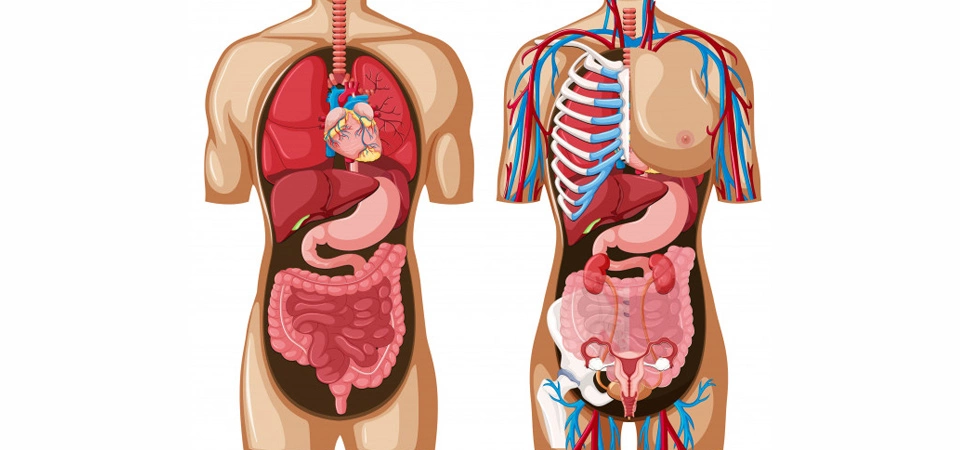
Our health is put at risk when the stable and delicately maintained balance among all our organ systems is disrupted. Of course, disease can also arise from injuries or toxic substances. But prolonged exposure to excessive strain, without adequate opportunity for rest, can also be a cause of illness.
Under normal conditions, even in an emergency, our body continues to carry out its vital processes without disruption. For example, when we break our arm in an accident, our breathing and digestive system continue on as if nothing happened. On top of all this, the body must also bear the heavy burden of the healing process. If, in addition to situations like these, additional health-threatening strains arise, the system becomes disrupted. Our nervous system plays a very important role in all these processes.
At the root of disease, alongside the nervous system, accumulated breakdown products in our body — such as "toxins lodged in the connective tissue that the body cannot eliminate" — also play an important role. Whatever the person's ailment may be, if these toxins cannot be removed from the body and the order (regulation) the body needs cannot be achieved, the next step will be functional disturbances in organs and tissues; if these disturbances continue for a long time, they will manifest as chronic diseases and cause structural damage to the organs.
 PAIN, one of the most important signs of disease, is created entirely through neural mechanisms. Pain cannot occur without the involvement of the sympathetic system. New and comprehensive research on pain confirms observations that have been made in the field of neural therapy for more than 100 years. When we hit our thumb with a hammer instead of a nail during a home repair project, or twist our ankle during sports, the sympathetic nerves that end freely in connective tissue — which we describe as independent nerve points (endings) — become activated. These nerve endings are called "nociceptors." They are found mostly in the skin, muscles, and internal organs. Nerve fibers are connected to the spinal cord and brain. In the event of injury, these nerve endings send the sensation (information) of pain as a "warning signal." This signal, traveling at 120 m/s, is relayed to the body through the nerve fibers, and the body reacts immediately. We then move away from the harmful thing or stop what we're doing. In this way, the injured part is protected.
In the case of an injury to the hand or a sprained (strained) ankle, the brain immediately calls for immobility. The system switches into self-protection mode. As soon as the injury heals, the pain signal disappears. The immobility signal ends. The nerve networks calm down and pain decreases. However, in the development of disease, there can sometimes be situations that don't announce themselves through pain, or there can be inflammation in internal organs — such as the stomach or tonsils — that haven't fully healed. These silent inflammations, like embers smoldering quietly inside, don't produce a visible reaction, but they continuously emit "silent signals" through the nerve fibers.
In some cases, these organs also release toxic substances or disease-carrying agents into their surroundings. Despite all of this, we notice nothing — until the body becomes weakened and reaches a point where it can no longer cope with these problems. That's when this smoldering ember suddenly bursts into flame. For example, in the presence of a simple, otherwise harmless infection (the common cold) or a situation like work stress, resistance capacity collapses and the symptoms of disease appear.
In such a situation, unexpected reactions can occur in the body. This is because the nerve pathways, and especially the sympathetic system, are extremely fatigued and overloaded due to this hidden, symptom-free disease process. As a result, misdirection occurs, or short circuits form throughout the nerve networks. This is why pain or complaints often begin to appear not where the actual problem is, but somewhere else in the body. This means that the complaint a patient consults a doctor about may actually belong to another, invisible disease. This then makes diagnosing — and consequently treating — the disease more difficult. This difficulty turns tracking down the actual factors causing the disease into a game of cat and mouse.
HOW DOES THE BODY BEHAVE WHEN ILLNESS OCCURS?
For the body to be healthy, a holistic treatment approach must be adopted, based on the principle that the body continuously regulates and automatically repairs itself. My late mentor, Prof. Dr. Herget — the doyen of complementary medicine, who played a great role in my introduction to and development in this field — used to describe this approach as treatment within the neuro-vegetative environment. I call the sum of the treatments I perform the Treatment and Regulation of the Neuro-Vegetative Matrix (the Connective Tissue and Basic Substance System). This involves taking neural therapy as the foundation, while also bringing in other stimulation therapies to cleanse and regulate the connective tissue.
When Neuro-Vegetative Matrix Treatment Regulation is applied, the body is encouraged to "heal itself," thereby removing the obstacles or blockages causing the regulatory disturbance.
This holistic approach is also about strengthening health. The real goal here is not so much fighting disease as supporting the body so that a person remains continuously healthy and does not fall ill.
Diseases do not appear suddenly. They often stem from many small, underlying negative stimuli and from a toxin burden that, at first, does not strain us or that we are not even aware of.
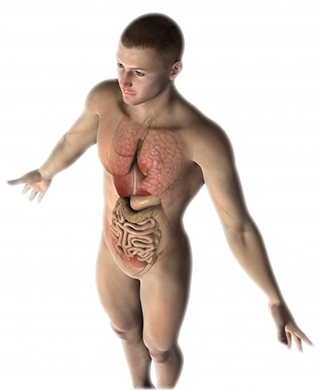 All of our organs are integrated and connected to the nervous system and spinal cord. From the exit points (openings) between the lumbar vertebrae, nerve endings leave the spinal cord in pairs, toward the right and left, and from there travel onward to reach the muscles, joints, ligaments, tendons, the circulatory system, and internal organs. Branching further from the organs, they extend into the muscles and layers of the skin. Here, there are 200 nerve endings per square centimeter. These nerve endings register mechanical stimuli such as "pressure and impact," thermal signals from outside (temperature changes), or chemical stimuli. These nerve endings, of course, also respond to signals coming from within the body. About 5% of the pain stimuli in the body come from various organs and spread to the nerves of the skin and muscular system. This explains why, during a heart attack, pain radiates to the left arm and hand, or why a gallbladder disorder can cause pain radiating to the shoulder region. Because nerves exit from various parts of the spine, we speak of "different levels = different segments." Different organs are supplied by the nerves exiting from each segment. Which organ, at which segment, has been damaged, and to which area of skin that damage has spread, must be determined by the doctor.
A neural therapy specialist trained in this field immediately recognizes the functional disorder we describe as segmental dysfunction. Painful or overly stimulated areas in certain regions of the skin, caused by nerve reflexes originating from the problematic organ, help make this determination.
Hidden, "silent" disease processes are called "Interference Fields." Interference fields usually indicate hidden chronic inflammation, chronic problems, or injuries. These conditions produce no symptoms, so they often go unnoticed. However, they create a constant burden for the organism and, over time, overload it excessively. Accordingly, they disrupt the functioning of the autonomic nervous system and hinder the continued healthy flow of important bodily functions.
Dr. Hüseyin NAZLIKUL
President of IFMANT = International Federation of Medical Associations for Neural Therapy
President of the Scientific Neural Therapy Regulation Association
Sources Consulted:
• Nazlikul, H: Neural Therapy Textbook
• Nazlikul, H: Neural Therapy — Another Treatment Is Possible
• H. Barop's Neural Therapy Atlas (Translator: H. Nazlikul)
• L. Fischer's Neural Therapy Book (Translators: H. Nazlikul and Y. Tamam)
• James W. McNabb, Joint and Soft Tissue Injections (Translators: H. Nazlikul and Y. Tamam)
• Weinschenk, S: Neuraltherapie
• Fischer, L et al: Lehrbuch Integrative Schmerztherapie