


Minerals Minerals are essential nutrients needed to regulate many functions in our body.

Copper (Cu)
-
 Very important and necessary for growth and development.
 -
Necessary for bone, cartilage, the substances that make up skin, hair, and many organs such as the heart.
-
Plays an important role in the immune system.
-
Helps in the storage and use of iron.
-
The foods richest in copper are: wheat, almonds, hazelnuts, walnuts, peas, beans, and shellfish.
-
In deficiency; anemia occurs. An increase in blood pressure and cholesterol is observed.
-
Shows a toxic effect when taken in excess. Excess fiber and zinc reduce copper absorption.
Zinc (Zn)
-
A mineral found in the structure of more than 70 enzymes in the body.
-
Increases cell proliferation as well as tissue growth and renewal. Essential for growth.
-
Zinc is effective in the development of the immune system and wound healing.
-
Effective in the storage and release of insulin hormones.
-
Another important property of zinc is that it increases the absorption of vitamin A.
-
The best sources of zinc are: seafood, meat, fish, milk, cheese, eggs, oily seeds, dried legumes, and grains.
-
In zinc deficiency; loss of sense of smell and taste, thinning of nails and white spots, acne, fatigue, developmental disorders, delayed wound healing, hair loss, sexual development disorders, night vision disorders, frequently recurring infections, infertility, and memory loss cause many health problems to emerge.
-
When zinc is taken in excess, iron absorption is hindered.
Iron (Fe)
-
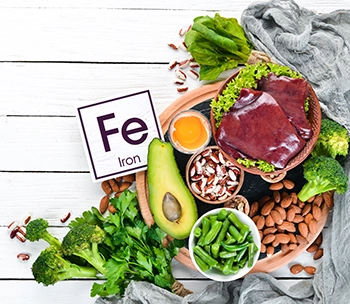 2/3 of the iron in our body is found in the composition of hemoglobin, which carries oxygen in the blood.
 -
Iron obtained from animal foods is absorbed more effectively by our body and has greater bioavailability than iron obtained from plant foods.
-
Iron is effective in regulating the immune system. It is protective against infections.
-
Plays a role in preventing anemia.
-
Deficiency is seen in situations such as insufficient dietary iron intake, intestinal parasites, iron loss from the body for various reasons, and increased need.
-
Compounds called tannins found in bran-containing foods hinder the use of iron in food.
-
When iron-rich foods are consumed together with foods containing vitamin C, the bioavailability of iron in the body increases.
-
The best sources of iron are: red meat, eggs, dried fruit, green vegetables, dried legumes, and oily seeds such as hazelnuts and peanuts.
-
In deficiency; iron deficiency anemia, fatigue, loss of appetite, and dizziness are seen.
Iodine (I)
-
Iodine is a mineral necessary for the functioning of the thyroid glands in the human body. 75% of the iodine in our body is found in the thyroid gland.
-
Found in the composition of hormones necessary for thyroid gland function and required for their production.
-
Plays a role in the functioning of basal metabolism.
-
An important mineral for prostate gland function and the development of reproductive organs.
-
The best sources are: seafood, fish, iodized salt, dairy products, and grains.
-
Iodine deficiency can cause problems such as physical and mental fatigue, slowing of movements, swelling, sluggishness, and constipation.
-
To prevent deficiency, iodized salt should be used, and it must be stored in dark-colored jars, away from sunlight. To prevent iodine loss, salt should be added to meals as the final step.
Calcium (Ca)
-
An important mineral for bone and dental health.
-
Plays a role in muscle contraction, blood clotting, and the transmission of nerve impulses.
-
Effective in balancing blood pressure. Therefore, it has a supportive role in the treatment of hypertension patients.
-
Regulates the release of certain hormones and is necessary for enzymes to perform their functions.
-
There are studies suggesting that adequate dietary calcium intake is effective in the treatment and prevention of obesity.
-
In deficiency; bone fractures, muscle cramps, osteoporosis, disorders in nerve and muscle cells, and disorders in blood cells and kidneys can be seen.
Chromium (Cr)
-
Found in the structure of enzymes and hormones in the body.
-
An effective mineral in carbohydrate, protein, and fat metabolism. Chromium increases insulin's effectiveness, helping glucose enter cells.
Magnesium (Mg)
-
Found in the structure of more than 300 enzymes. Present in the structure of the skeleton along with calcium and phosphorus in the body.
-
Ensures the continuity of muscle and nervous system cells. Regulates the central nervous system.
-
Protective against heart and vascular diseases. Helps regulate blood pressure.
-
Related to 80% of all bodily activities. Prevents fibromyalgia symptoms. Prevents and reduces muscle cramps; regular use has been shown to reduce muscle contractions.
-
Regular use of magnesium reduces mental tension.
-
The best sources are: walnuts, hazelnuts, peanuts, dried legumes, green vegetables, and whole, unrefined grains.
Selenium (Se)
-
 A natural and important antioxidant. Works together with vitamin E.
 -
Thanks to its antioxidant property, it protects cells against oxidation and strengthens the immune system.
-
Selenium and vitamin E are necessary for the healthy functioning of the heart and liver. It protects cells and has a property that increases body resistance.
-
Shows a preventive effect against cancer, stroke, and heart disease.
-
Effective in the functioning of thyroid hormones.
-
The best sources are: seafood, grains, broccoli, cabbage, celery, onion, garlic, radish, and eggs.
-
In deficiency; fatigue, irritability, heart muscle problems and heart disease, muscle pain, developmental disorders, increased infections, liver dysfunction, pancreatic insufficiency, infertility, increased cholesterol levels, and weakening of the immune system are known to occur, which in turn facilitates the development of cancer.
-
In recent years, emphasis has been placed on its effect in preventing many types of cancer.
-
Excessive selenium intake shows a toxic effect. It causes problems such as nausea, vomiting, hair loss, skin rash, and cirrhosis.
Sodium and Potassium (Na and K)
-
The most important minerals of body fluids. They play a role in controlling intracellular fluid balance and maintaining acid-base balance.
-
Help relax the heart muscle and all other muscles, and assist in the transmission of nerve impulses.
-
Ensure the regulation of blood pressure.
-
In deficiency; disruption of heartbeat, muscle fatigue, mental fog, and difficulty breathing are seen.
-
The best sources of potassium are: green vegetables, potatoes, bananas, apricots, and fruits such as citrus fruits. Sources of sodium include all pickled foods, bouillon added to meals, instant soups, baking powder, and mineral water.
-
When excess sodium is taken in, high blood pressure and edema formation are observed.
For more information on this and related topics, you may benefit from my book "The Anti-Inflammatory Nutrition Guide."
You can find neural therapy and Hüseyin Nazlikul's other treatment methods here.
Dr. Hüseyin NAZLIKUL, M.D., PhD.
President of IFMANT = International Federation of Medical Associations for Neural Therapy
President of the Scientific Neural Therapy and Regulation Medicine Association