

Why Neural Therapy? Although developments in modern medicine have been dizzying, unfortunately it…

Although developments in modern medicine have been dizzying, it has unfortunately been forgotten that a human being is a whole. Diagnoses made through tests such as laboratory work, ultrasound, MRI, CT, and other radiological examinations only show functional disorders and morphological changes.
Correcting only patients' physical and chemical bodies is not enough for them to be healthy; a treatment must also include regulating a person's emotional and energetic state.
Although the inclusion of psychosomatic factors in the diagnostic and treatment process of modern medicine in recent years has been a positive development, from the perspective of regulation medicine, the situation is still far from complete.
Although the psychosomatic perspective is considered important for regulation medicine and holistic medicine, it still lacks a fully integrative perspective.
For more information on this subject, I recommend taking a look at my book "Neural Therapy – Another Treatment Is Possible."
With the Neural Therapy approach, rather than immediately addressing a single complaint, you will see what the disease actually is, how it develops, what factors play a role in its development, what symptoms arise, that neural therapy does not merely suppress complaints, and that true treatment is genuinely possible.
Because our body exists thanks to extraordinarily complex systems being well organized, one on top of the other, and functioning according to certain rules and cycles — the circulatory system, metabolism, digestive system, hormonal regulation, temperature regulation, and the immune system, among others...
All these systems function flawlessly because they are so well managed and because cells are in constant communication with one another.
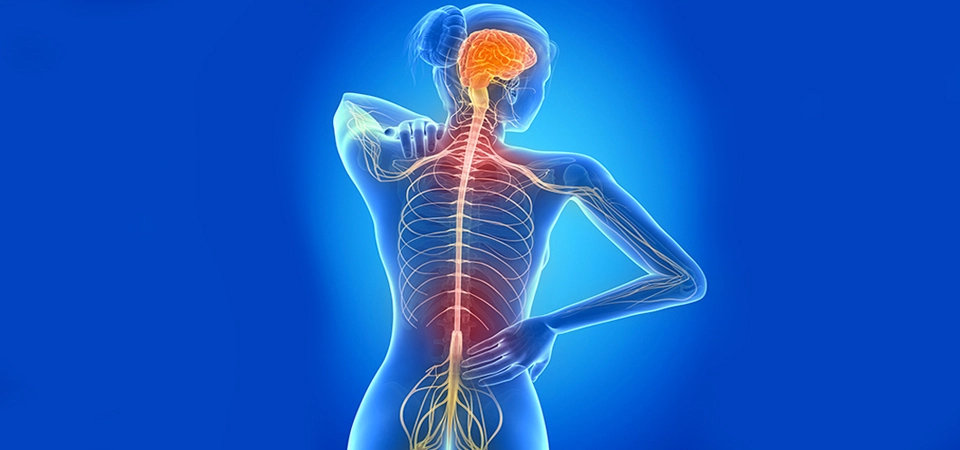
However, for our body to be healthy, the nervous system — which wraps around every part of our body like a network — plays an important role in this flawless functioning.
When a disease state emerges, this condition does not affect just one organ — like "the gallbladder, the stomach, a joint" — it affects the entire system (the body).
Intervening in this situation and bringing the organism's processes, which have drifted from their normal working order, back into balance is the main task of true medicine — and, at its core, of Neural Therapy Regulation Medicine.
In the neural therapy approach, the body is not viewed as an organism made up of the sum of individual organs. This is because, in the holistic and regulatory approach, alongside each organ functioning without problems, the relationships between organs, the body's energy, and the individual's psychological and social state also matter.
For this reason, neural therapy, based on this approach, evaluates as a whole the connective tissue that forms the central axis and the true functionality of the Autonomic Nervous System — or, synonymously, the Vegetative Nervous System (VNS) — that regulates all the functions of the body, and diagnosis and treatment are carried out on this basis.
The concept of a healthy person at the beginning of the 20th century transformed, by the middle of the century, into the health of organs. Toward the end of the century, tissue health began to be discussed, and as the century drew to a close, the health of the cell began to be debated.
Today, in modern medicine, the health of genes has begun to be discussed. Genetic inheritance is blamed for many diseases. Yet when many chronic diseases today are examined, it becomes clear that environmental factors and epigenetics are far more important than genetics. Parameters such as laboratory tests, ultrasound, MRI, and CT are evaluated, but these examinations don't look at the person as a whole. A person can only be healthy through the clothes they wear, the water they drink, the environment they live in, the food they consume, quality sleep, balanced physical activity, managing daily stress, and taking care of their body to avoid illness — in other words, as a whole.
Because there is a fact we need to remember and keep in mind: a human being is not a machine.
The approach imposed by modern medicine — repairing parts of the human body or replacing them with new ones — does not make the whole body healthy. For this reason, treatments performed solely to repair a disease that shows symptoms in the body, or in other words, damaged organs and tissues, cannot succeed on their own.
 To make a person healthy, one must understand that the body, mind, and spirit form a whole and interact with one another.
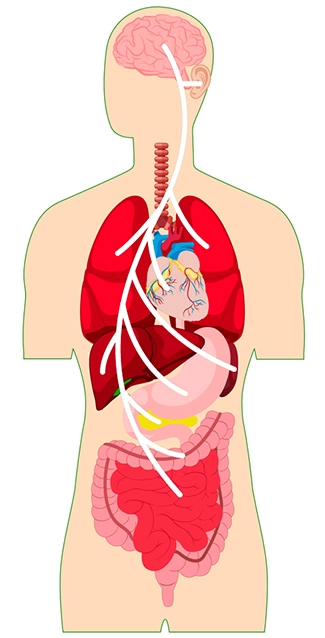
The biological foundation of true regulation in our body is formed by the autonomic nervous system.
Under stress, the sympathetic nervous system — an important part of the autonomic nervous system — becomes overactive, and this activity disables the "vagus," one of the cranial nerves. In this state, the person is defenseless against every incoming stimulus.
To be healthy and achieve lasting healing, the goal must be to regulate the autonomic nervous system.
The most effective treatment method for re-regulating the autonomic nervous system and restoring its functionality is a regulation treatment carried out with the neural therapy approach. At the root of disease, alongside the nervous system, accumulated breakdown products in our body — such as "toxins lodged in the connective tissue that the body cannot eliminate" — also play an important role.
Whatever the person's ailment may be, if these toxins cannot be removed from the body and the order (regulation) the body needs cannot be achieved, the next step will be functional disturbances in organs and tissues; if these disturbances continue for a long time, they will manifest as chronic diseases and cause structural damage to the organs.
No patient is the same as another, and even when diagnosed conditions are similar, the way they present differs. For this reason, rather than dealing with a symptom or disease, a holistic approach must be taken for the person's complete and lasting health.
TO SUCCEED IN TREATMENT:
The human body must be evaluated from a more comprehensive perspective. The morphological perspective encompasses physical and chemical parameters. However, functional integrity and its perspective must also be included in treatment. The functional perspective in question must also encompass energetic and cybernetic states. The main condition for success in treatment is an accurate diagnosis.
The diagnostic process must be individualized, taking into account the temporal relationship of the changes occurring in the person as well as their functional structure. In this sense, neural therapy is the name of the method that can serve as a bridge between regulation medicine and modern medicine.
Neural therapy is a treatment method that originates from modern medicine, has developed its own body of knowledge, and established its own techniques — it is essential for true health.
WHEN AND IN WHICH CONDITIONS DOES NEURAL THERAPY HELP?
In modern regulation medicine, neural therapy affects the entire circulatory system in the organism. It has effects on the nervous system, hormonal, muscular, circulatory, and lymphatic systems. It also has effects on the musculoskeletal system, digestive system, gynecological area, hormonal axis, limbic system, detoxification organs, and excretory system. For this reason, this treatment option has a wide range of applications.
Because it contributes to circulation and anti-inflammation and removes blockages formed in the organism, neural therapy is successful not only in acute conditions but also in the treatment of chronic diseases.
Neural therapy methods are helpful in treating pain, gynecological, urological, and allergic diseases, as well as internal organ diseases.
Neural therapy is a holistic treatment method applied using the body's working mechanisms and neuroanatomical connections, with its diagnostic capability and the regulatory effects of local anesthetics on segmental, supra-segmental, and interference-field-related neuro-immune responses.
The core treatment principle is based on Neurovegetative Regulation. The basic function of the neurovegetative system is to establish the connections between humoral, cellular, neural, and hormonal regulatory mechanisms, ensuring their participation in reactions within the system.
Accordingly, any disturbance occurring in just one of these mechanisms will result in functional disruption throughout the entire system. In short, disease will affect not just one organ, but the entire body. Neural therapy applications, performed by injecting local anesthetic into dysfunctional tissue, not only eliminate the disturbance in the neurovegetative system but also achieve regulation of all the regulatory mechanisms listed above.
In this way, as a result of regulating the electrical conduction in the nerves and tissues, disrupted body functions return to normal, making it possible for patients to be restored to their former healthy state.
Sources Consulted:
• Nazlikul, H: Neural Therapy Textbook
• Nazlikul, H: Neural Therapy — Another Treatment Is Possible
• H. Barop's Neural Therapy Atlas (Translator: H. Nazlikul)
• L. Fischer's Neural Therapy Book (Translators: H. Nazlikul and Y. Tamam)
• James W. McNabb, Joint and Soft Tissue Injections (Translators: H. Nazlikul and Y. Tamam)
• Weinschenk, S: Neuraltherapie
• Fischer, L et al: Lehrbuch Integrative Schmerztherapie