


What is neural therapy? The first thing we need to do to understand how neural therapy treatment…

Our body exists thanks to extraordinarily complex systems that are well organized, one on top of another, and that operate according to specific rules and cycles; the circulatory system, metabolism, the digestive system, hormonal regulation, thermoregulation, the immune system, and so on. All these systems function flawlessly because they are very well managed and because cells are in constant communication with one another.
At the same time, the nervous system, which envelops every part of our body like a network, plays an important role in this flawless functioning. When a disease condition appears, it does not affect only one organ, such as "the gallbladder, stomach, or a joint"; on the contrary, it affects the entire system (the body). It is the task of medicine to intervene in this situation and to restore balance to organism processes that have deviated from their normal functioning order.
 In the neural therapy approach, the body is not viewed as an organism made up of a mere collection of individual organs. Because, in the approach of wholeness and regulation, in addition to the organs each functioning without problems, the relationships between them, the body's energy, and the person's psychological and social state are also important. For this reason, the basis of this approach evaluates, as a whole, the connective tissue that forms the central axis, and the true functionality of the autonomic nervous system—or synonymously, the vegetative nervous system (VNS)—which regulates all functions of the body; the diagnosis is made and the treatment carried out within this context.
Neural therapy is a modern treatment method used to regulate the organism as a whole. For this reason, neural therapy does not focus only on certain symptoms; on the contrary, it observes the entire "operating system" of the body. This perspective places it among natural treatment methods, but because it is treatment-oriented and rests on scientific foundations, neural therapy occupies a place somewhere between natural medicine and modern Western medicine.
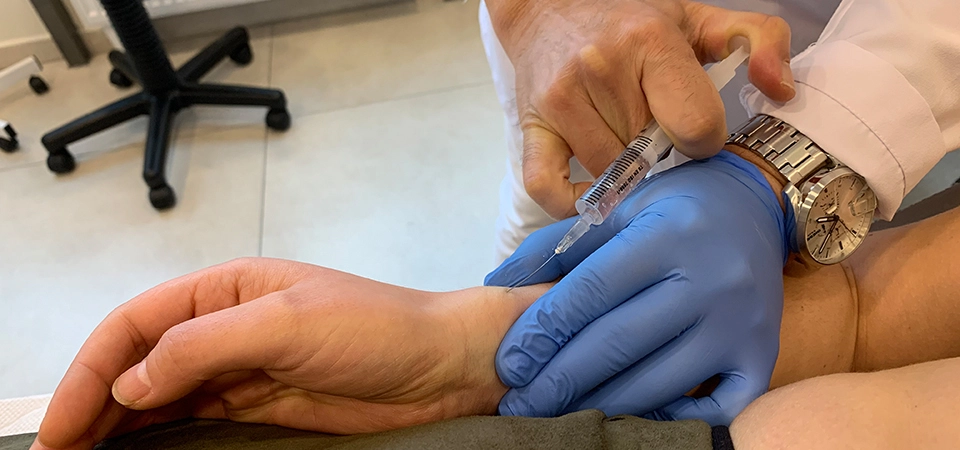
Medications Used in Neural Therapy: The term neural therapy refers to a form of treatment carried out using the body's own neurovegetative system. In other words, neural therapy is the treatment of various diseases, and especially pain, via the central and peripheral vegetative nervous system, using local anesthetics.
Neural therapy is a regulation treatment. A stimulus is sent via local anesthetics to specific points or areas on the body, and the body responds to this stimulus either at that site or at points above it. This response guides us both in making a diagnosis and in providing treatment.
Chronic Diseases and Conditions That Respond to Neural Therapy
- Chronic inflammation of the tonsils and sinuses, chronic runny nose
- Middle ear infections
- Tendon sheath inflammations
 Neuralgia, nerve inflammation (sciatica)
- Trigeminal neuralgia
- Headache, migraine, tension-type and cluster headache
- Recurrent irritable bladder, cystitis (bladder inflammation)
- Eye inflammations and other eye diseases (glaucoma)
- Chronic skin diseases (eczema, dermatitis, psoriasis, etc.)
- Diarrhea, constipation, IBS, Crohn's disease, ulcerative colitis, intestinal inflammation, gastritis, stomach inflammation
- Pancreatic, liver and gallbladder diseases
- Prostate disorders
- Thyroid gland dysfunction (both excess and deficiency)
- Tinnitus, imbalance and dizziness
- Sleep disorders
- All types of acute and chronic pain, scar pain, headaches, migraine, recurrent pain
- Lumbago, lower back pain, back pain
- Neck and lower back pain and herniated discs that do not require surgical intervention
- Rheumatic pain, arthrosis
- Blood disorders
- Chest pain of cardiac origin
- Circulatory system diseases
- Sensitivity to weather changes
- Fatigue
- Asthma
- Pollen allergy and other allergies
Diseases for Which Neural Therapy Is Not Suitable
Acute cardiovascular diseases, severe infectious diseases such as tuberculosis or AIDS, genetic diseases, cirrhosis, and severe arthrosis with restricted movement are examples of conditions for which neural therapy treatment is not suitable. Likewise, psychological conditions such as severe depression, bipolar disorder and schizophrenia, as well as cancer, cannot be cured by neural therapy. However, benefit can still be achieved in these diseases through the identification and elimination of chronic interference fields. Indeed, through supportive treatment with neural therapy, even patients with tumors can develop a stronger immune system in their fight against the tumor.
How Long Does Treatment Take?
The duration of treatment depends on the complaint and the patient's physical condition. If the complaint has only just begun, in which case it is an acute event, two or three treatment sessions may be sufficient. Chronic problems, on the other hand, may require a longer course of treatment. For chronic back pain arising from various causes, in cases where no prior treatment has been sought, the average treatment duration is approximately 5-6 sessions. These average treatment durations were established as a result of numerous advanced studies at the University of Bern in Switzerland and at the Giessen Medical Faculty. According to these same studies, the treatment outcomes of neural therapy are better than those of previous treatments, while its treatment cost is lower.
Achieving Success in Treatment
The human body needs to be evaluated from a more comprehensive perspective. The morphological perspective encompasses physical and chemical parameters. However, functional wholeness and perspective must also be incorporated into this picture. This functional perspective must also include energetic and cybernetic states.
The main condition for success in treatment is an accurate diagnosis. The diagnostic process must be tailored to the individual, and the temporal relationship of the changes occurring in the person, along with their functional structure, must be taken into account. It is in this sense that neural therapy is a method capable of serving as a bridge between regulation medicine and modern medicine. Neural therapy is a treatment method rooted in modern medicine that has developed its own methods and achieved its own advancement, and it is the most effective treatment for regulating a disrupted nervous system.
Dr. Hüseyin NAZLIKUL, M.D., PhD.
IFMANT = President of the International Federation of Medical Associations for Neural Therapy
President of the Scientific Neural Therapy Regulation Association
Sources Used:
• Nazlikul, H: Nöralterapi Ders Kitabı
• Nazlikul, H: Nöralterapi Başka Bir Tedavi Mümkün
• H. Barop's Nöralterapi Atlası (Translated by H. Nazlikul)
• L. Fischer's Nöralterapi Kitabı (Translated by H. Nazlikul and Y. Tamam)
• Weinschenk, S: Neuraltherapie
• Fischer, L et: Lehrbuch Integrative Schmerztherapie