


Understanding the Autonomic/Vegetative Nervous System Is Essential to Understanding Neural Therapy…

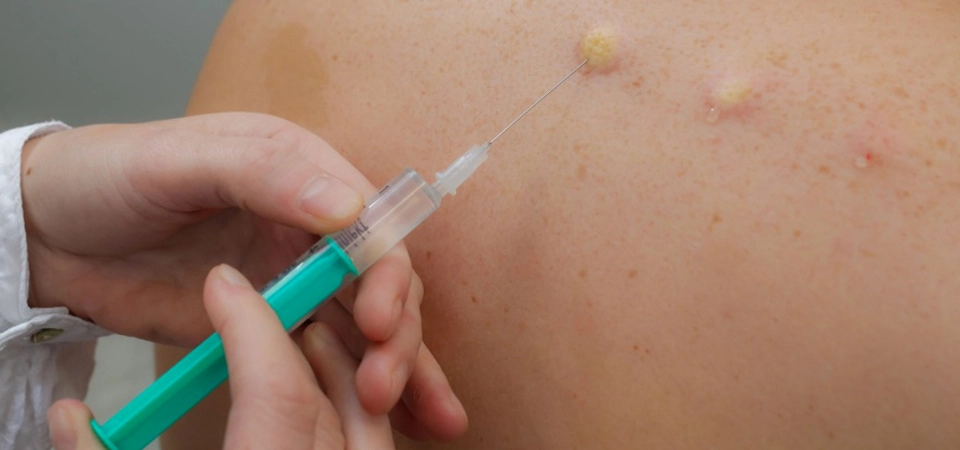
The vegetative nervous system (VNS), also known as the autonomic nervous system, is a functional whole. It continuously harmonizes all organ systems with each other according to internal and external conditions.
The free nerve endings located within the ground substance of the autonomic nervous system—used synonymously with the vegetative nervous system—form a terminal reticulum that provides mutual interaction between the peripheral nervous system and the central nervous system.
The part of the nervous system that supervises the functions related to the body’s internal organs is called the vegetative, or autonomic, nervous system. This system assists in the regulation of arterial pressure, motility and secretion of the digestive system, bladder emptying, perspiration, body temperature, and many other activities and systems—some of which are entirely, and some partially, controlled by the autonomic nervous system.
The vegetative, or autonomic, nervous system is a functional unit. Its two divisions, called the Sympathetic and Parasympathetic systems, regulate the functions of all organs as two control systems consisting of afferent and efferent pathways.
During stress or intense physical exertion, sympathetic tone increases (heart rate and respiration accelerate, perspiration increases, intestinal movements decrease, alertness rises, etc.).
When parasympathetic tone increases, “opposite” effects occur, and above all, general regeneration, rest, and repair are achieved.
The nervous system in the intestines has a special anatomy called the enteric system. This system is also governed by the sympathetic and parasympathetic systems.
The vegetative, or autonomic, nervous system penetrates the ground substance, which contains connective tissue in very fine networks. Its main task is to preserve the internal environment and ensure that organ functions are coordinated with one another.
This function of the vegetative nervous system is also referred to as homeostasis, homeodynamics, or homeobalance, and it appears to be carried out according to the cybernetic principles of the body’s economy.
The prerequisite is that all stimuli the body is exposed to, whether from within or without, are processed through a continuous flow and handling of information. Both the peripheral (ground system) and central (hypothalamus) structures are connected to the hormonal system. In other words, the body produces a hormonal response to all the stimuli it is exposed to, by way of the vegetative nervous system.
The vegetative, or autonomic, nervous system has integration stages connected by numerous, vertically organized feedback loops:
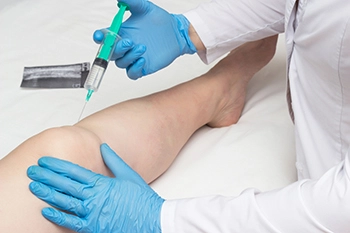 The peripheral division of the vegetative nervous system (free nerve endings together with the ground system)
- The peripheral-spinal stage (the segmental-reflex complex)
- The rhombomesencephalic stage (medulla oblongata, pons, formatio reticularis, tectum, etc.): cardiovascular functions, attention, rhythm, gamma motor function, etc.
- The diencephalic stage (thalamus, hypothalamus)
- The cortical stage (limbic system, psychic phenomena seen in somatic illnesses, etc.)
In the case of a peripheral stimulus, the lowest integration stage (free nerve endings together with the ground system) first attempts to balance (compensate for) the stimulus. As the duration or intensity of exposure to the stimulus increases, the next integration stage comes into play. The distinction between these different integration stages is, in fact, made for didactic purposes.
Viewed within the integrity of regulation, the extracellular ground substance/matrix between each layer—particularly the vegetative nervous system—holds information about all parts of the system. On average, about 70% of our body is water. In other words, all this information resides within that water.
THE CENTRAL AUTONOMIC SYSTEM
The central nuclear groups of the sympathetic and parasympathetic nervous systems are located in different regions. Sympathetic nuclei are located in the thoracolumbar region, while parasympathetic nuclei have a craniosacral location.
The thoracolumbar sympathetic and sacral parasympathetic nuclei are found in the lateral horns of the spinal cord. The parasympathetic nuclei in the brainstem are the Edinger-Westphal nucleus, the nuclei salivatorii, and the dorsal vagal nucleus.
THE PERIPHERAL AUTONOMIC SYSTEM: THE SYMPATHETIC SYSTEM
Preganglionic fibers belonging to the white matter extend from the lateral horns along the anterior root, via the r. communicans albus, to the truncus sympathicus anteriorly. Within the ganglia of the system (the paravertebral ganglia), the fibers undergo a substantial change. The fibers that change are unmyelinated. The nerve fibers that return to the spinal nerve via the r. communicans griseus are likewise unmyelinated (“gray”).
The paravertebral ganglia of the trunk are arranged in a regular pattern in the thoracic section. There are 10-11 ganglia in the thoracic region and 4 ganglia in the lumbar and sacral regions. Distally, the chain terminates in the ganglion impar, located at the level of the coccyx.
In the neck, that is, the cervical region, there are 3 paravertebral sympathetic ganglia:
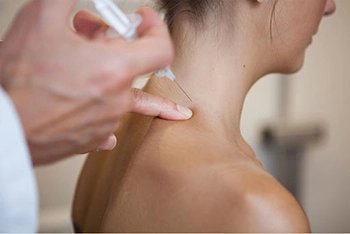 Ganglion cervicale superius,
- Ganglion cervicale medius (variable)
- Ganglion cervicale inferius. The lowest cervical ganglion is usually fused with the uppermost thoracic ganglion, the ganglion stellatum.
Along the trunk ganglia (paravertebral ganglia), the fibers of the prevertebral ganglia—whose largest members lie in front of and beside the spine and the abdominal aorta (e.g. the ganglion coeliacum)—pass through. These prevertebral ganglia are located within a large nerve network that also contains parasympathetic fibers.
Sympathetic nerve branches, in the head region, travel especially along the arteries (cranial to the Ganglion cervicale superius). This means that wherever the arterial and capillary system is present, the sympathetic nervous system is also present. In other words, the sympathetic nervous system is the name for the system that regulates the oxygen supply and blood flow to our body. In the cervical sympathetic nervous system, there is no r. communicans albus. Instead, in the neck region, there is an R. communicans griseus that has connections with the rr. spinales branches of the cervical spinal cord and numerous cranial nerves (n. hypoglossus, n. glossopharyngeus, n. vagus, n. laryngeus superior and inferior).
THE PARASYMPATHETIC NERVOUS SYSTEM
Unlike the sympathetic nervous system, the switching points (ganglia) of the parasympathetic nervous system are located near, or even within (intramural to), the organs.
The Cranial Parasympathetic Nervous System The fibers of the cranial parasympathetic nervous system extend, within various cranial nerves, to ganglia in the head region (Ganglion ciliare, pterygopalatinum, oticum, submandibulare). Within these ganglia, the parasympathetic fibers undergo a change. Sympathetic and autonomic-sensory afferent fibers, as well as somato-sensory fibers, also pass by these ganglia without changing.
The Sacral Parasympathetic Nervous System The axons of the sacral parasympathetic fibers extend along the ventral roots. They exit via the cauda equina and the foramina sacralia and extend to the n. pudendus. From there, as the Nn. splanchnici pelvini, they enter the prevertebral plexus (the Plexus hypogastricus superior and inferior, the Plexus vesicoprostaticus, and the plexus uterovaginalis). Sympathetic nerve fibers are also present within these plexuses.
THE TERMINAL DISTRIBUTION OF THE VEGETATIVE AUTONOMIC NERVOUS SYSTEM
Nerve fibers do not terminate directly on the parenchymal cells of organs, but rather within the ground system. There is no clearly defined autonomic nerve ending in the periphery. Instead, there is what Zypen, Stöhr, and Reiser described as the terminal reticulum—a fine, open-ended neurofibrillar network.
This terminal reticulum appears to be integrated into the ground system with almost no transition. According to van der Zypen, “the transmission of a stimulus can suddenly occur anywhere within the autonomic network.” Because the ground system and the sympathetic nervous system are present everywhere, this stimulus can reach anywhere, including all segmental arrangements.
This widespread transmission of stimuli is significant for the phenomenon of the interference field in neural therapy.
IN SUMMARY:
- The autonomic nervous system is a functional whole. It continuously harmonizes all organ systems with each other according to internal and external conditions.
- The free nerve endings located within the ground substance of the autonomic nervous system form a terminal reticulum that provides mutual interaction between the peripheral nervous system and the central nervous system.
DYSFUNCTIONS ARISING FROM DISRUPTION OF VEGETATIVE NERVOUS SYSTEM FUNCTIONS:
- Excessive and intense stimulation resulting from exceeding the tolerance limit
- Disruption of information flow, incorrect evaluation—in short, distortion of information
- Disruption of the blood supply, i.e. perfusion, of tissues and organs (the underlying basis of chronic disease and degeneration is disrupted perfusion)
- Disruption of lymphatic circulation
- Disruption of organ structure
- Tissue and organ degeneration/inflammation
From this perspective, Prof. Dr. Gustav Ricker explained the pathogenesis of perfusion as follows:
- Diseases with the same clinical picture may have different pathogeneses (relational pathogenesis).
- Diseases arise from non-specific neurogenic origins (disruption of perfusion).
- The specificity of diseases (the disease picture) depends on the effect that the perfusion disturbance has on the structure.
Ricker described the importance of the VNS and its responsibility for the body’s homeostasis under the following headings:
- The VNS passes through the ground substance—in other words, the ground system—in the form of a very finely woven network.
- Its principal task is to preserve the constancy of the milieu (environment) and to coordinate organ functions.
- What matters here is the continuous gathering and processing of information.
- The hormonal system is present both peripherally (the ground system) and centrally (the hypothalamus).
Ricker’s definition, which emphasized that the primary task of the VNS is to preserve the milieu and coordinate organ functions, was later elaborated in greater detail by Pischinger and Heine.
Pischinger and Heine described the formations and reactions occurring within the transit distance of the connective tissue as the preservation of the constancy and balance of the milieu. The details of the reactions occurring within this distance were further elaborated in greater depth by Pischinger and Heine.
Sources Used:
- Nazlikul, H: Neural Therapy Textbook
- Nazlikul, H: Neural Therapy, Another Treatment Is Possible
- H. Barop’s Atlas of Neural Therapy (Translator: H. Nazlikul)
- L. Fischer’s Neural Therapy Book (Translators: H. Nazlikul and Y. Tamam)
- James W. NcNabb (Translators: H. Nazlikul and Y. Tamam), Joint and Soft Tissue Injections
- Weinschenk, S: Neuraltherapie
- Fıscher, L et al: Lehrbuch Integrative Schmerztherapie
- Nazlikul, H: Dissertation (Doktor medicinae) im Rahmen des postgradualen Universitätslehrganges für Ganzheitsmedizin –Regulationsmedizin “Neuraltherapie Naturheilverfahren, Regulationsverfahren und Herdgeschehen” von PD. Dr. med. Hüseyin Nazlikul 2010 Die Medizinische Fakultät Charité.
- Nazlikul, H.: Thorakale Wirbelblockaden erfolgreich therapieren S34-38, 1, 2/2008 für Allgemeinärzte
- Nazlikul H, Babacan A. The role of neural therapy in injections. Babacan A, editor. Pain and Injections. 1st Edition. Ankara: Türkiye Klinikleri; 2019. p.110-7.
- Reuter URM, Oettmeier R and Nazlikul H (2017) Procaine and Procaine-Base-Infusion: A Review of the Safety and Fields of Application after Twenty Years of Use.
- Herget, F, H, Nazlikul, H: "Neurophysiologie und Neuropharmakologie der Schmerzmatrix" S. 56 ff
- J. Cassuto et al.; Antiinflammatory properties of local anesthetics and their present and potential clinical implications; Acta Anaesth Scand 2006;50:265-82
- M.W. Hollman et al; Local Anesthetic effects on priming and activation of human neutrophils; Anesthesiology 2001:95:113-22
- Barop, H.: Lehrbuch Neuraltherapie, Haug Verlag 1996
- Barop, H.: Lehrbuch Neuraltherapie, 2nd Revised Edition, Haug Verlag 2015
- Fischer, L: Neuraltherapie nach Huneke 2004 HD
- Weinschenk, S: Handbuch Neuraltherapie – Thieme Verlag 2020