


Neural Therapy and Therapeutic Local Anesthesia: A Comparison Although neural therapy and…

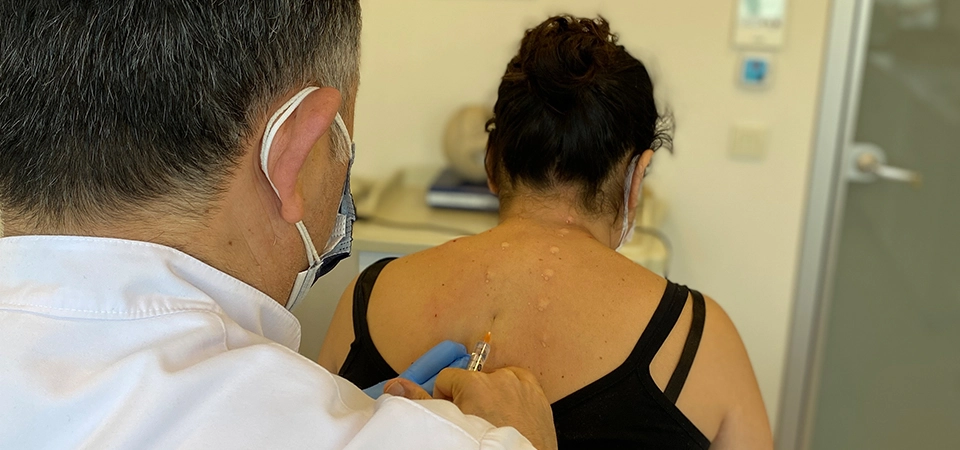
While therapeutic local anesthesia is used primarily as a pain-treatment tool, neural therapy is a complex diagnostic and treatment method that takes deeper physiological connections into account. This article will emphasize that neural therapy is not merely a pain-treatment method and has a diagnosis-based background, while explaining why it differs from therapeutic local anesthesia.
1. Neural Therapy: Diagnosis and Treatment Together
Neural therapy goes beyond the symptomatic treatment of pain alone. This therapy is based on the premise that disturbances in the autonomic nervous system, particularly in segmental regions, can lead to chronic complaints over the years. One of the most important characteristics of neural therapy is that approximately 70% of the treatment consists of diagnosing the underlying interference fields and regulatory disturbances, while 30% is devoted to treatment itself.
Neural therapists do not consider only the local pain region; they also frequently investigate deeper causes located in other parts of the body. This is achieved by making injections into specific regions of the body associated with interference fields or segmental structures. Neural therapy focuses on identifying regulatory disturbances and resolving disorders linked to the autonomic nervous system. Through the injections performed, interference fields are deactivated, thereby activating the organism's own self-healing process.
A neural therapist pays particular attention to factors affecting the sympathetic and parasympathetic nervous systems, which frequently lose their balance during the course of disease. Injections made into specific regions can correct this imbalance, which in turn activates the body's self-healing powers.
2. Therapeutic Local Anesthesia: Symptomatic Pain Treatment
Unlike neural therapy, therapeutic local anesthesia is aimed primarily at the symptomatic treatment of pain. It is generally used in pain treatment and aims to locally block the sensation of pain. In this treatment, not only is a local anesthetic used, but cortisone is also often added to provide anti-inflammatory effects. Here, the local pain takes center stage, and the injection is made exactly where the patient feels pain.
Therapeutic local anesthesia is generally not aimed at diagnosing interference fields or segmental regulatory disturbances; it is primarily intended to provide temporary pain relief. It is not concerned with the autonomic nervous system or the overall regulation of the organism, focusing solely on the short-term relief of symptoms.
3. The Diagnosis-Based Foundation of Neural Therapy
Neural therapy emerged in 1906 when Prof. Spiess scientifically demonstrated the anti-inflammatory effect of procaine and its role in wound healing; in 1924, when Prof. G. Ricker emphasized the importance of hyperactivity in the sympathetic nerve in the development of disease, along with circulatory disturbances and the failure to remove breakdown products; and in 1938, when Ferdinand and Walter Huneke developed the concept of interference fields and their effects on the entire organism. This method is based on the idea that a chronic inflammation or an autonomic disturbance in the body can affect different, and often distant, regions. For this reason, neural therapists are trained to search not only for factors related to the symptoms but also for the underlying disturbances.
The neural-therapeutic approach requires an in-depth understanding of the interactions between the nervous system and different regions of the body. This diagnostic component is what fundamentally distinguishes neural therapy from therapeutic local anesthesia. While therapeutic local anesthesia is essentially a symptomatic treatment, neural therapy is an in-depth method aimed at restoring the disrupted autonomic balance in the body. This, in turn, supports the organism's own self-healing process.
4. Neural Therapy Is a Medical Practice
It is important to emphasize that neural therapy is a medical discipline that requires not only therapeutic but also diagnostic skills. This sets it apart not only from therapeutic local anesthesia but also from other manual methods. Physicians who practice neural therapy are trained to recognize deep-seated connections and to develop patient-specific treatment strategies. For this reason, neural therapy is not merely a pain-treatment technique, but a comprehensive treatment approach that takes into account the organism's entire regulatory system.
5. Comparing Neural Therapy and Manual Medicine
Manual medicine, like neural therapy, is an approach that includes both diagnostic and therapeutic elements. This method is practiced by specialist physicians who have undergone comprehensive training. Unlike manual treatment, manual medicine involves an in-depth diagnosis of functional disorders of the musculoskeletal system. Here too, just as in neural therapy, treatment is not applied on its own; comprehensive diagnostic knowledge is also required. Manual medicine and neural therapy are both in-depth, diagnosis-based practices performed by physicians.
Conclusion: Neural Therapy Is a Comprehensive Medical Method
Neural therapy should not be placed on the same level as therapeutic local anesthesia. It goes far beyond being merely a pain-relief method and is based on an in-depth, diagnosis-driven approach that takes into account the autonomic nervous system and segmental interference fields. Through injections made into specific regions of the body, the disrupted balance in the autonomic nervous system is restored, which in turn supports the organism's healing process. Neural therapy is a physician's practice that requires medical knowledge and skill, aiming not only at symptomatic treatment but at recovery that takes into account the organism's overall regulatory system.
Dr. Hüseyin NAZLIKUL
IFMANT = President of the International Federation of Neural Therapy Societies
President of the Scientific Neural Therapy Regulation Association