


Local Anesthetics Used in Neural Therapy - Safely Applied Medications in Neural Therapy In neural…

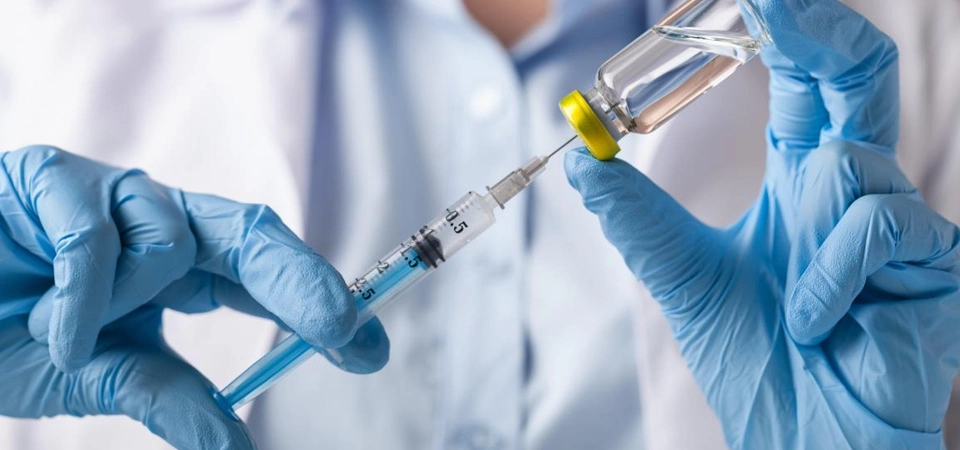
In neural therapy, the effect is achieved by injecting the medication in a targeted manner into precisely defined tissue structures. This plays a major role in reaching the sympathetic nervous system, which is distributed throughout the organism, and in ensuring rapid information transfer within the organism's self-regulation.
Procaine and lidocaine are most commonly used in neural therapy. As a rule, long-acting local anesthetics (LA) do not provide a better therapeutic effect. The goal is not so much a long-lasting effect as breaking a vicious cycle. For this reason, a short-acting LA is more appropriate. The therapeutic effect arises, on one hand, from the stimulus created by the needle (and the organism's response to it), and on the other hand, from the brief interruption of the neuronal conduction arc, which shows pathological fluctuation.
Medications Used in Neural Therapy: Neurotherapeutics
 Even without any medication, simply inserting a needle into the skin initially represents a non-specific stimulus that is answered afferently and efferently, both by the fast-conducting, sensitive nervous system and by the sympathetic nervous system. It is possible to use a medication in order to intensify the stimulus. The use of distilled water, saline, other medications, and even air injections to trigger the stimulus in neural therapy proves that the choice of medication is secondary. On one hand, segmental reflex effects are triggered solely by the stimulus and are, among other things, indirectly used for treatment of the sympathetic system. On the other hand, by infiltrating a local anesthetic substance, the sympathetic conduction arc is interrupted, and the subsequent normalization of sympathetic function is used directly for treatment.
The use of local anesthesia (LA) is an indispensable prerequisite, particularly for eliminating an interference field. This relates to the targeted interruption of the stimulus accompanying the subsequent therapeutic effect, which depends on the process of normalizing sympathetic function—a process that lasts longer than the interruption of the stimulus caused by the anesthesia itself. The targeted stimulus, whether from a simple needle prick (e.g. dry needling or acupuncture) or the additional administration of an analgesic substance, causes, among other things, segmental reflexive activation of inhibitory neurons. Therefore, these can only indirectly affect the sympathetic dysfunction associated with the disorder of that particular segment. Since, in a disease triggered by an interference field, the primary disorder lies outside the segment, the disorder cannot be reached by these means.
Comparison of the Two Main Local Anesthetics Used in Neural Therapy
Procaine |
Lidocaine |
|
|
Chemical structure |
Amino-ester |
Amino-amide |
|
Duration of effect |
20 minutes |
60-90 minutes |
|
Diffusivity |
+ + |
+ + + + |
|
Tissue distribution capacity |
+ + |
+ + + + |
|
Penetration capacity |
+ + |
+ + + + |
|
Breakdown |
Hydrolysis |
Oxidative Breakdown |
|
By specific pseudo- |
Into acetaldehyde and |
|
|
cholinesterase |
ethylaminoaceto-2,- |
|
|
Into para-aminobenzoic acid and diethylaminoethanol |
6-xylidide in the liver |
|
|
Excretion |
Kidney |
|
|
Toxicity |
50% less toxic than lidocaine |
|
|
Neurotoxicity |
+ |
+ + |
|
Placental transfer |
+ |
+ |
|
Maximum amount per treatment unit |
500 mg |
250 mg |
When we consider the response of the vegetative nervous system (autonomic nervous system) used in neural therapy, the goal is to use the shortest possible local anesthesia, because the therapeutically successful completion of vegetative conduction depends on interrupting the normally pathological conduction, not on duration. Here, ester-type procaine in a 1% solution, without any additives—particularly without vasoconstrictors and preservatives—represents the first choice as an optimal local anesthetic.
General symptoms observed with procaine application include: mild dizziness, a general feeling of warmth, mild sweating, a metallic taste, an internal "trembling" sensation, rarely brief lapses in concentration, or rarely brief disturbances of speech, vision or hearing.
When the maximum local anesthesia dose is exceeded, or when an injection is administered intravenously via a vessel or intra-arterially into a vessel leading to the brain, toxic reactions affecting the entire organism can be expected, with the subsequent shutdown of vital brain functions. Generally, the overall toxic response is divided into two phases: an initial excitation phase and a second paralysis phase (Moor, Southworth, Pitkin and others, Zipf, Nolte in Kilian: 1973). The clinical picture of intoxication is the same for all local anesthetics, although both phases do not necessarily occur.
Particularly in recent years, new and interesting effects have been identified: it is interesting that procaine has been proven to lower elevated glucocorticoid levels seen in Alzheimer's disease, age-related depression, and AIDS, and clinical effects can be expected in these diseases as well.
An especially interesting finding for future research is procaine's effect on carcinogenesis: DNA methylation deactivates tumor suppressor genes. Procaine also has DNA-demethylating effects. Based on these results, procaine is thought to have a strong protective effect against tumors.
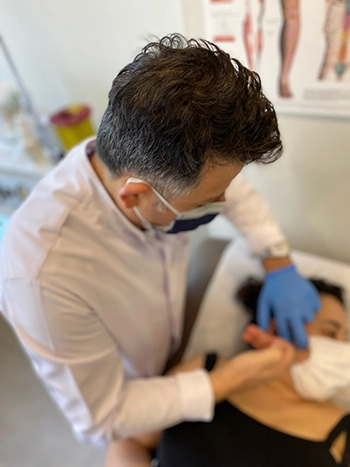 The general systemic and pharmacological effects of procaine are as follows:
- Membrane stabilization,
- Anti-arrhythmic,
- Muscle relaxant,
- Bronchospasmolytic,
- Spasmolytic on the sphincter of Oddi and intestine,
- Increases coronary perfusion,
- Negative inotropic,
- Negative chronotropic,
- "Endo-anesthetic" (positive modulation of pulmonary stretch receptors, the carotid body, vascular receptors, visceral receptors, and smooth and striated muscle),
- Anticonvulsant (opposite effect in overdose),
- Specific stimulus modulation in the limbic system,
- Antihistaminic,
- Anti-inflammatory,
- Sympatholytic,
- Parasympatholytic,
- Vasodilatory,
- Antiviral,
- Arterial
- Antibacterial,
- Antifungal,
- (Stimulating) effect on immune system cells,
- Protective effect against tumors (DNA demethylation),
- Cortisol-lowering effect,
- Antithrombotic effect
Injections should never be made into the vessels leading to the brain or into the cerebrospinal fluid space of the central nervous system in the cranial region. Otherwise, among other effects, spasms, loss of consciousness, and cardiac and respiratory arrest can occur. For this reason, a very careful aspiration test must be performed in the head and neck region, and injections must be given very slowly while carefully monitoring the patient's general condition.
Practical Application
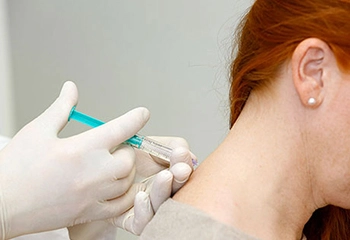 In an adult weighing approximately 75 kg, no more than 20 ml of a 1% lidocaine solution should be used per session. Although it is clear that higher amounts can be used clinically due to its lower toxicity, it has been found appropriate to apply the same amount for procaine as well. When doses higher than 20 ml are used, some patients report a mild, brief (2-10 minute) dizziness of autonomic origin that does not indicate any toxic or allergic reaction. In practice, since neural therapy aims, on one hand, to resolve the impulse and, on the other hand, to briefly disable fine nerve fibers, it is never necessary to use more than 20 ml of lidocaine or procaine per session.
The amounts given naturally apply only to injections into tissue. For intravascular injections, no more than 1-3 ml of a 1% lidocaine or procaine solution should be used.
Paying attention to the LA dose used is important!
Classic neural therapy doses do not cause any toxic burden. However, this can sometimes occur in patients where lidocaine is used. In Turkey, lidocaine ampoules are available in 1%, 2% and 10% forms. Mixing these up can lead to dose excess. Only procaine and lidocaine should be used in neural therapy. Overdose with other LAs occurs more quickly and more frequently. We recommend only procaine and lidocaine as safe options.
Symptomatology of Local Anesthetic Toxicity
|
Excitation |
Paralysis |
|
Restlessness |
Loss of consciousness, coma |
|
Slurred speech |
Complete loss of sensory and motor function |
|
State of confusion Tachycardia, palpitations |
Bradycardia, arrhythmia, cardiac arrest |
|
Hypertonia |
Hypotonia |
|
Respiratory distress, hyperpnea, nausea/vomiting |
Dyspnea, cyanosis, apnea |
|
Convulsions |
|
|
Tremor |
|
|
Tonic-clonic seizures |
|
|
Increase in body temperature |
|
Dr. Hüseyin NAZLIKUL
IFMANT = President of the International Federation of Medical Associations for Neural Therapy
President of the Scientific Neural Therapy Regulation Association
Sources Used:
• Nazlikul, H: Nöralterapi Ders Kitabı
• Nazlikul, H: Nöralterapi Başka Bir Tedavi Mümkün
• H. Barop's Nöralterapi Atlası (Translated by H. Nazlikul)
• L. Fischer's Nöralterapi Kitabı (Translated by H. Nazlikul and Y. Tamam)
• James W. McNabb's Eklem ve Yumuşak Doku Enjeksiyonları (Translated by H. Nazlikul and Y. Tamam)
• Weinschenk, S: Neuraltherapie
• Fischer, L et: Lehrbuch Integrative Schmerztherapie