


Neural Therapy for Plantar Fasciitis (Heel Pain) Plantar fasciitis is a painful inflammation of the…

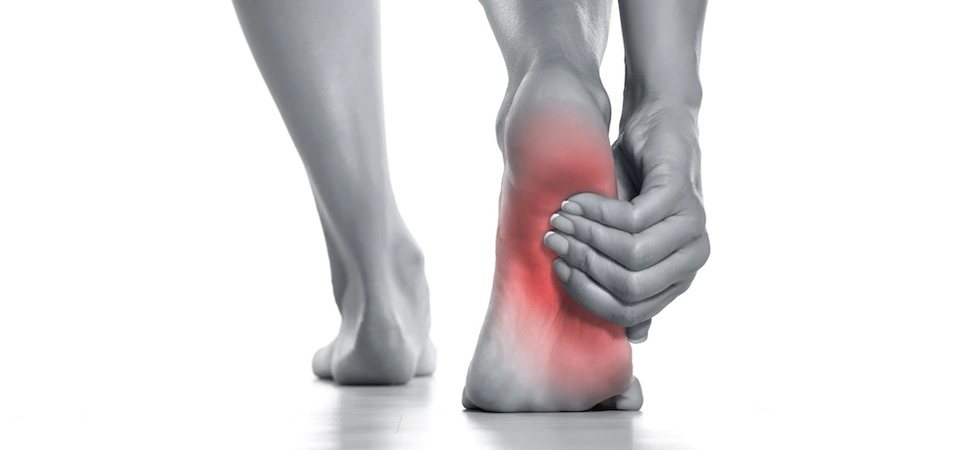
A heel spur is a spike-like bone growth (calcium deposits) at the sole of the foot (plantar) or at the attachment of the Achilles tendon (dorsal/cranial), and it generally results from years of excessive loading of the foot in question. It can trigger tears and inflammation in the tissue surrounding the area. However, recent studies have concluded that a heel spur is more a result of plantar tendinitis than its cause.
Plantar fasciitis generally results from intense exercise. All types of running (short-distance, middle-distance, and long-distance running), soccer, basketball, dance, and tennis are considered high-risk sports .
What are the symptoms and causes of plantar fasciitis? Is a heel spur always the underlying cause? What is the most effective treatment for relieving the pain?
 Plantar fasciitis (also called plantar tendinitis, plantar fasciosis, or plantar fasciopathy) is a painful, generally one-sided, and chronic inflammation of the plantar fascia.
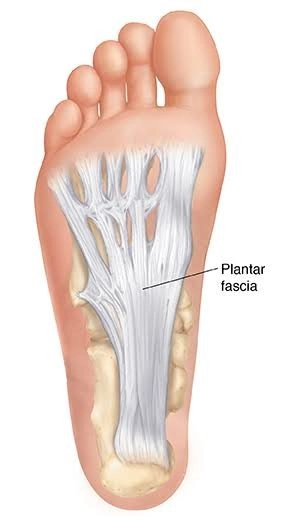
The plantar fascia is the tendon plate of the sole of the foot, made up of tough fascial tissue (connective tissue), that connects the toes, the metatarsal bones, and the heel bone, supporting the longitudinal arch of the foot. In addition, the plantar fascia provides stability while walking. It is also a structure that provides orientation. It is estimated that approximately 80% of all heel pain is due to plantar fasciitis.
The condition is thought to be common. However, there are no reliable figures on its frequency. Experts estimate that one in every ten people experiences inflammation-related heel pain at least once. People between the ages of 45 and 65 in particular are affected by this condition. Plantar fasciitis can appear at any age, and women are more vulnerable than men.
Causes and Risk Factors of Plantar Fasciitis
A combination of different factors generally leads to inflammation of the plantar fascia, which is why experts speak of a multifactorial development. The trigger is generally overloading or irritation of the plantar tendon.
The main risk factors for plantar fasciitis are as follows:
- Excess weight, obesity (body mass index / BMI > 27)
- Shortened calf muscles, which are anatomically associated with increased tension on the plantar tendon
- Incorrect foot position (for example: high arches, flat feet, etc.)
- Different leg lengths (pelvic tilt)
- Muscle imbalances (for example: in the hip, lumbar spine, knee joint, or core muscles)
- Micro-trauma in the foot and heel region
- Bursitis at the attachment site of the plantar fascia
- Spending too much time in traffic and driving
- Frequently wearing shoes that are too tight or have high heels
- Underdeveloped foot muscles
Characteristic Symptoms of Plantar Fasciitis
A typical inflammation of the plantar fascia is severe heel pain in the foot (generally described as stabbing). This pain primarily occurs during the first steps taken right after getting up, or when the tendon is first loaded after a long period of inactivity (starting pain). In the advanced stage of the inflammation, the pain generally spreads to the entire sole of the foot and the Achilles tendon, or it can be clearly felt while lying down. Most patients have difficulty moving the inflamed foot.
Classically, athletes primarily feel heel pain when they warm up. As exercise continues, the symptoms weaken or disappear entirely. Intense sprints and jumps, or continuous heavy loading of the foot, can revive the symptoms. If heavy loading of the heel continues, the pain also generally increases.
The most important differential diagnoses for plantar fasciitis are as follows:
- Arthrosis of the ankle
- Reiter's disease
- Ankylosing spondylitis
- Rheumatoid arthritis
- Fractured bones
- Soft tissue abscesses (particularly with a pre-existing condition such as diabetes)
- Tumors in the foot region
How Is Plantar Fasciitis Diagnosed?
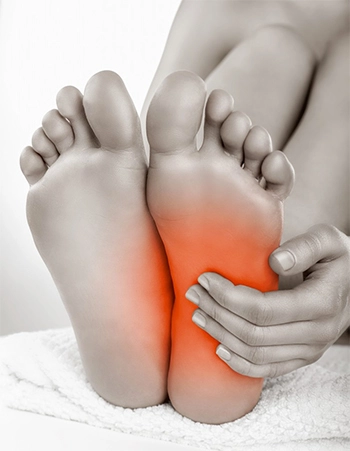 If the pain in the heel region is unclear, or if a specific plantar tendinitis is suspected, it is the right approach to see a physical therapy, orthopedics, manual medicine, or neural therapy specialist. Based on a comprehensive medical history and clinical examination, a diagnosis of plantar fasciitis can generally be made quickly and often even without the help of imaging procedures.
For example, when taking the medical history, the doctor asks questions about the type, onset, and location of the pain, as well as the course of the illness, previous conditions, and regular athletic/professional strain on the heel.
Clinical examination of heel pain initially includes a palpation exam: If symptoms intensify when the attachment of the plantar fascia at the heel is felt or pressed, this indicates plantar fasciitis.
A foot X-ray is generally only performed if heel pain persists despite prolonged conservative treatment. For example, a heel spur or calcification and thickening of connective tissue can be clearly seen on it. Other imaging methods, such as ultrasonography, magnetic resonance imaging, or skeletal scintigraphy, are also used in diagnosis. However, their necessity is debated among experts.
What Are the Treatment Methods for Plantar Fasciitis?
Many medical publications report that heel pain regresses or disappears within a year regardless of treatment. However, this claim has not yet been supported by scientific studies. What is certain is that conservative treatment approaches produce good results within six months in more than 90% of those affected.
Medication treatments:
Non-steroidal anti-inflammatory drugs are used for acute and painful plantar fasciitis. These medications are mainly acetylsalicylic acid, arylpropionic acid derivatives (e.g. ibuprofen ), or arylacetic acid derivatives (e.g. diclofenac). Topically applied ointments or gels containing ibuprofen or diclofenac, which also have parallel anti-inflammatory effects, can also help with heel pain. However, due to their shallow penetration depth, they are less effective than tablets.
Many of those affected achieve positive results with cortisone injections (glucocorticoid injections). However, in the long term, cortisone applications can cause permanent damage in this area. The anti-inflammatory steroid hormone has side effects such as atrophy of the plantar fat pad or tendon rupture.
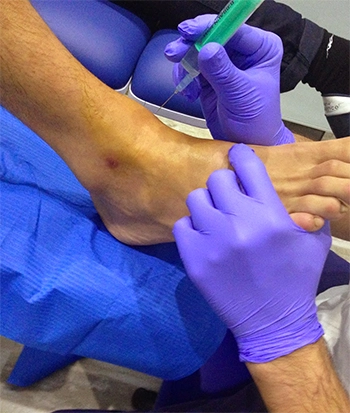 Neural therapy with local anesthetics is quite effective for plantar fasciitis!
Local anesthetic injections into the painful heel region also reduce the symptoms caused by plantar fasciitis. If the injections are combined with segment and extended segment treatment through the neural therapy approach alongside the local injection, a lasting solution is achieved. If neural therapy is not performed and only local applications are made, it may only provide temporary relief.
Relieving therapies:
All measures that reduce the chronic overloading of the plantar fascia fall into this category.
For example:
- Overweight or obese individuals losing weight through healthy eating
- Regularly keeping the painful foot elevated
- Providing corrective shoe insoles adapted to the structure of the foot that support the longitudinal arch of the foot in existing deformities (pressure reduction)
- Wearing a night splint (orthosis) that stretches the toes of the foot toward the shin can stretch the tendon plate and speed up the healing process
- Reducing sporting activities that may overload the plantar fascia
- Keeping exercise short (without causing pain)
- Choosing well-cushioned shoes suitable for the sport/activity
- Not standing constantly in the same position, changing position at regular intervals
Stimulating treatments:
Regular stretching and isometric exercises for the calf muscles and the plantar fascia, performed right after the neural therapy application, provide benefit. Exercises should also be recommended to the patient as homework in this regard. According to studies, this can achieve good results both in the short and long term (including complete relief from pain).
Low-dose X-ray radiation (low-dose radiotherapy) will, among other things, help provide blood flow to the inflamed tissue and also help with the pain.
Extracorporeal shock wave therapy, a procedure in which electromagnetically generated, precisely aligned pressure waves—delivered with the help of a sound probe—destroy painful deposits such as a heel spur, may represent another treatment option. At the same time, heel massage and kinesiotaping reduce pain by increasing circulation.
When Is Surgery Necessary to Relieve the Plantar Fascia?
In general, plantar fasciitis very rarely requires surgery. This is because multimodal conservative treatments are generally effective.
Neural therapy, applied together with post-isometric stretching, produces excellent results!
If heel pain persists for more than twelve months despite conservative treatment and the diagnostic exclusion of other causes, and significantly restricts quality of life, physicians should weigh whether surgery would be beneficial. If necessary, getting a second medical opinion can be far more helpful. Out of 100 people with plantar fasciitis, only about 1 undergoes surgery.
How Does Plantar Fasciitis Typically Progress?
 At first, the pain in the heel only appears occasionally and disappears again when the patient rests. However, if the stress or irritation of the plantar tendon remains the same, symptoms appear more frequently and with increasing intensity.
Since people with heel pain generally shift into other positions while walking (for example: stepping on the heel or walking quietly), the spine, knees, hips, or ankles can suffer long-term damage from chronic plantar fasciitis. A relieving posture leads to strong and painful muscle tension in the long term. If left untreated, plantar tendinitis can restrict mobility.
How Can Plantar Fasciitis Be Prevented?
Since inflammation of the plantar tendon generally results from overloading, the risk of the condition can be significantly reduced with the following preventive measures:
- BMI should be within the normal range. If you are overweight or obese, it is recommended that you lose weight.
- The entire foot should be well supplied with blood. In addition to regular exercise and muscle exercises, foot massages (for example, with the help of a spiky ball or fascia roller) and cold water applications (Kneipp applications) are beneficial.
- Smoking should be strictly avoided, as it constricts blood vessels and prevents oxygen from reaching the tissue.
- To relieve the feet, the muscles should be rested by elevating them.
- Calluses on the sole of the foot and heel can be prevented with nourishing foot baths, softening creams, and, if necessary, removal of the callus by a podiatrist. Regular medical care is recommended for problem feet.
- Shoes worn for work and leisure should be flat and comfortable and should be changed more often.
- When working while standing, position should be changed frequently.
- Recreational athletes prone to tendon problems should avoid high-risk sports such as running, tennis, dance, basketball, and soccer, in which there is little or no pressure on the heel and sole of the foot, and switch to alternatives such as cycling and swimming.
- As a rule, individually adapted special shoes should be worn during sport (many specialty stores offer foot and running analyses).
- Pace should be increased slowly, especially in running disciplines and exercise. Otherwise, overloading situations will quickly arise.
- Regular stretching and strengthening exercises for the muscles and tendons keep the feet strong and healthy and effectively prevent plantar fasciitis.
Dr. Hüseyin NAZLIKUL
IFMANT = President of the International Federation of Medical Associations for Neural Therapy
President of the Scientific Neural Therapy Regulation Association
Sources Consulted:
• Nazlikul, H: Nöralterapi Ders Kitabı
• Nazlikul, H: Nöralterapi Başka Bir Tedavi Mümkün
• H. Barop's Nöralterapi Atlası (Translator: H. Nazlikul)
• L. Fischer's Nöralterapi Kitabı (Translators: H. Nazlikul and Y. Tamam)
• James W. NcNabb, Eklem ve Yumuşak Doku Enjeksiyonları (Translators: H. Nazlikul and Y. Tamam)
• Weinschenk, S: Neuraltherapie
• Fıscher, L et al: Lehrbuch Integrative Schmerztherapie