


The Regulation Medicine Neural Therapy Approach to Trigeminal Neuralgia Pain is always an alarm…

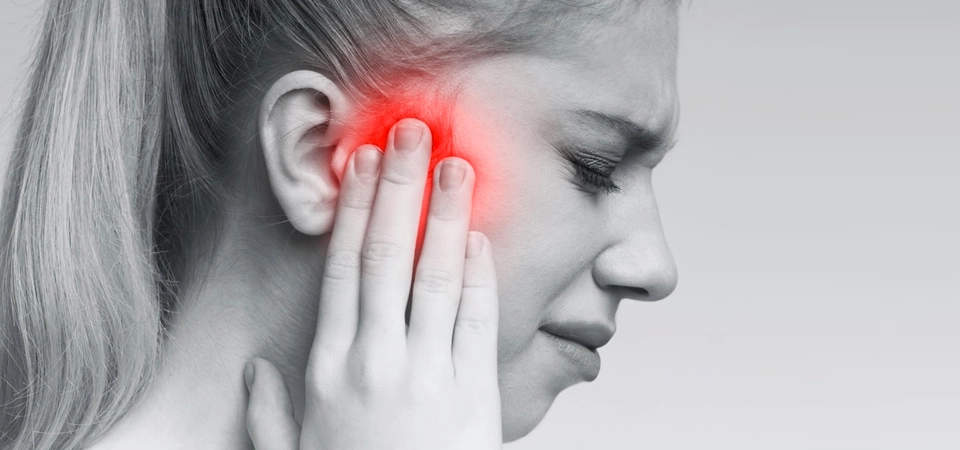
Pain is always an alarm system. According to the holistic and complementary medicine approach of regulation medicine and many researchers, pain in the head region is caused by physiological dysfunctions or organic diseases. As with any pain, in approaching the pain, it is necessary to consider the initial character of the pain, its form, when it appeared, the factors that facilitated its onset, concurrent complaints, the site and localization to which the pain radiates, the factors that reduce or increase the pain, the duration of the pain, the intensity of the pain, pain triggers, its relationship with neighboring structures, and, from a neural therapy standpoint, the temporal relationship of the pain.
Pain in the head region is not related to the head alone. The structures that can be a source of pain should be evaluated as the skull and the structures within it, the cervical spine, the nerves there and the muscles they supply, the facet joints, the cranial nerves and central nervous system, the teeth, gums, tooth roots, the mucosa within the nose, the nose itself, the eyes, throat, sinuses, and ears.
For diagnosis, research and tests should be conducted to identify the source of the pain.
Characteristics of Neuralgic Pain: Neuralgia-type pain has distinctive characteristics. When asked to describe the pain, the characteristics the patient identifies make it easy to distinguish from other types of pain. Neuralgic pain begins very suddenly and is brief. Neuralgia recurs at certain intervals, and there are pain-free periods between attacks. Neuralgic pain is perceived within the innervation area of a cranial or peripheral nerve. It can arise spontaneously or be triggered by a specific stimulus. During these severe, painful attack periods, there may be brief motor or vasomotor activity.
It can occur in the cranial nerve pairs as well as in peripheral nerves. In addition, the pain seen in diabetic neuropathy, postherpetic neuralgia, post-rhizotomy, and peripheral nerve lesions are examples of neuralgia-type pain and clinical syndromes that present with neuralgia.
Trigeminal neuralgia is the most typical example of the neuralgias we encounter most frequently. Other neuralgias in this group include: glossopharyngeal neuralgia, involving the ninth cranial nerve pair; occipital neuralgia, originating in the neck; nervus intermedius neuralgia; sphenopalatine ganglion neuralgia (Sluder’s neuralgia); postherpetic facial neuralgia; vagal neuralgias involving the tenth cranial nerve pair; temporomandibular neuralgias centered on the jaw joint; neuralgias caused by an interference focus or interference field; and atypical facial neuralgia.
DIFFERENTIAL DIAGNOSIS IS ALSO IMPORTANT IN TRIGEMINAL NEURALGIA
Making the differential diagnosis of every disease requires the physician’s knowledge and skill, and is the accumulated experience that enables them to reach the correct diagnosis. Although trigeminal neuralgia may seem easy to diagnose due to its typical pain, there are similar clinical conditions for which a differential diagnosis must be made:
- Cluster headache
- Tension-type headache
- Atypical facial pain
- Glossopharyngeal neuralgia
- Odontogenic facial pain
- Migraine
- Osteomyelitis
- Craniomandibular dysfunction (CMD) (Should be investigated especially in every case)
- Neuroborreliosis
- Postherpetic neuralgia
- Sinusitis
- Cancer pain
- Glaucoma attack
SYMPTOMS AND CLINICAL PRESENTATION OF PATIENTS WITH TRIGEMINAL NEURALGIA
The pain may be distributed or involve one or more branches of the trigeminal nerve. Trigeminal nerve neuralgia, that is, the pain, can be sudden, sharp, superficial, stabbing, burning, or like a bolt of lightning. It is an extremely severe pain. The intensity of pain the patient experiences can last anywhere from a few seconds to a few minutes. It can begin with thermal, mechanical, or heat-based stimulus attacks. There is no pain between attacks. Trigeminal neuralgia is characterized by periods of remission. Unfortunately, however, these intervals may shorten over the years.
Trigeminal neuralgia can be divided into 3 separate groups according to its clinical characteristics:
1- Idiopathic Trigeminal Neuralgia: The most important characteristic of this type of neuralgia is that there is no central or peripheral stimulus. Attacks are sudden, very severe, and brief. There is sensitivity and stimulation in the area supplied by the relevant trigeminal nerve branch. It is generally one-sided. There is no motor or sensory loss involving the nerve branch in question. Involvement of motor innervation can cause motor tics, facial twitching, and muscle contractions; involvement of sympathetic innervation, due to stress-related circulatory disruption in the affected area, can cause hyperesthesia, tearing, runny nose, and increased salivation.
2- Symptomatic (Sympathetic) Trigeminal Neuralgia: This is often set in motion by an infection the patient has experienced. The pain is related to the infection. Decayed teeth, gum infection, unresolved formations within a filling, pulpitis, sinusitis, TMJ pathologies, malignancy, dental prosthetics, residual cysts in the teeth, herpes. This type of pain may occur only a few times and, in some cases, may begin and spread differently.
3- Atypical Trigeminal Neuralgia: The important characteristic of this type is that the location of the pain cannot be well described. The pain does not occur in attacks. The patient experiences this pain continuously. The pain spreads particularly toward the temples, the temporal region, and the neck. This type of neuralgia is seen more often in young and middle-aged women. The pain can also intensify without any apparent cause.
THE CORRECT DIAGNOSIS DETERMINES THE SUCCESS OF TREATMENT
Taking an accurate and comprehensive patient history and conducting an examination is the most important diagnostic method for trigeminal neuralgia. Besides imaging methods used to search for a mass or compression, there is no other screening method available.
CONVENTIONAL TREATMENT OF TRIGEMINAL NEURALGIA
Treatments applied today are still symptomatic. Although there have been advances in the medical treatment of trigeminal neuralgia, these are still inadequate. In the modern medicine approach, the goal of treatment is aimed at suppressing or relieving the pain, rather than eliminating the cause that gives rise to trigeminal neuralgia.
The Regulation Medicine and Neural Therapy approach, on the other hand, is aimed at what we call the source of the problem, the underlying cause. In our approach, we aim to find the cause giving rise to the neuralgic complaints, eliminate it, and re-regulate the body. As you can also see in the neural therapy approach at this link, the pathophysiological changes that give rise to the complaints are examined, the individual’s specific condition is identified, and the obstacles are removed.
Neural therapy is a “regulation treatment.” Neural therapy is applied both diagnostically and therapeutically. In the human body, certain changes occur before diseases manifest. Often, at the root of these conditions—which modern medicine cannot explain and which are claimed to be related to the patient’s own psychology—lies a disruption in the patient’s overburdened vegetative nervous system.
Neural therapy is the treatment of various diseases, particularly inflammation, local and systemic diseases, and pain, using local anesthetics, via the peripheral and central vegetative nervous system. In neural therapy applications, a stimulus is created using a 0.5-1% concentration of lidocaine or procaine (local anesthetic), and in response to this stimulus, a response comes back from the segment and the centers to which the segment is connected. This stimulus serves not only a therapeutic purpose but also helps us with diagnosis.
In neural therapy, the sites or foci referred to as interference fields create stimuli that chronically strain the system, leading to the collapse of the body’s self-balancing mechanisms and the emergence of the disease picture.

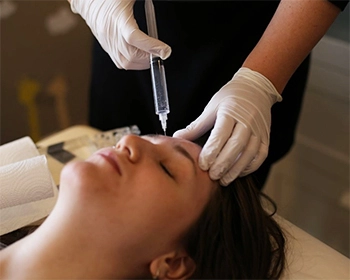 Depending on the subtype of trigeminal neuralgia, there are also some variations in the treatment approach applied. A detailed patient history is very important for treatment, because the underlying cause is decisive for the success of treatment, since trigeminal neuralgia patients are among the group of patients who respond quite well to this type of treatment. With neural therapy treatment, there is both a marked reduction in the severity of the pain and a marked decrease in the frequency with which the pain recurs.
We can underscore the reasons for the effectiveness of neural therapy in the treatment of trigeminal neuralgia by explaining the treatment goals:
- The first goal is to eliminate the microcirculatory disturbance of the trigeminal nerve and improve perineural perfusion, that is, to eliminate the circulatory disturbance.
- By injecting a local anesthetic agent to record readings on the sympathetic system, chronic inflammation and neural pathological stimulation are reduced.
- To reduce "input overload" via WDR neurons. As in the spinal cord, overload in the brain stimulates the WDR neurons of organ systems dorsally through multiple nociceptive afferents via a similar system.
- To reverse "neuroplasticity." Nociceptive activation leads to an increase in gene transcription dependent on primary afferent neurons, dorsal horn neurons, and projection neurons (activity-dependent gene expression).
- Neural therapy needs to reduce neurogenic inflammation. With the local anesthetics we apply, a circulatory disturbance in pathological sympathetic activity and neurogenic inflammation arise through the release of proinflammatory neuropeptides (substance P, CGRP) from the nerve endings of the sympathetic nervous system.
- Including, from the very start of treatment, the interference fields identified by the patient and associated by us with the condition will increase the success of treatment. The mouth, jaw, and dental region in particular should be examined carefully in this regard, both because it is supplied by the same nerve and because it carries a high potential to be an interference field.
CONCLUSION
Numerous studies conducted on trigeminal neuralgia have clearly demonstrated the effectiveness of neural therapy in treatment. Unfortunately, the successful results achieved in this area are not yet sufficiently well known among patients and the medical community.
In patients with chronic headaches such as trigeminal neuralgia, neural therapy applications should be the primary treatment approach. It is very clear and evident that a neuralgia treatment carried out without neural therapy will end in failure.
Sources Used:
• Nazlikul, H: Neural Therapy Textbook
• Nazlikul, H: Neural Therapy, Another Treatment Is Possible
• H. Barop’s Atlas of Neural Therapy (Translator: H. Nazlikul)
• L. Fischer’s Neural Therapy Book (Translators: H. Nazlikul and Y. Tamam)
• James W. NcNabb (Translators: H. Nazlikul and Y. Tamam), Joint and Soft Tissue Injections
• Weinschenk, S: Neuraltherapie
• Fıscher, L et al: Lehrbuch Integrative Schmerztherapie