


The Codes of a Long and Healthy Life: Important Warnings from Nazlikul
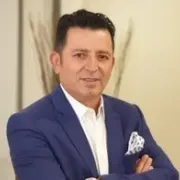
Odatv columnist Prof. Dr. Hüseyin Nazlikul's new work "Vefa Eşiği" has been released by İnkılâp Kitabevi. Prof. Dr. Hüseyin Nazlikul, who has mapped out healthy living for readers through the books he has written over the last 20 years, this time presents his holistic approach through "Regulated Life Longevity." What's more, he's preparing to meet readers through his poetry for the first time.
"THESE BOOKS WEREN'T WRITTEN THIS YEAR, THEY'RE THE ACCUMULATION OF YEARS"
Prof. Dr. Hüseyin Nazlikul, who has drawn attention with his "regulation" approach in the field of health for many years, points to an important detail when describing the background of his new books:
"These works weren't written this year. They're the accumulation of four different books I've been working on intensively over the past three years. Following an offer from İnkılap Üçüncü Göz, I gathered these works together, and three of them were published this year."
According to Nazlikul, these books are not the product of a single period, but the result of a journey:
"These aren't spontaneous ideas; they're the distilled essence of years."
"LONGEVITY ISN'T NEW, WE'VE BEEN TALKING ABOUT THIS FOR YEARS"
Nazlikul, who also takes a critical approach to the concept of "longevity," which has become popular in recent years, emphasizes that this field is not new:
"Longevity is being discussed today, but we started talking about this in 2003 in the book 'Hayatı Keşfet' (Discover Life). Then came detox, the gut, inflammation, sleep… They were all actually parts of the same whole."
According to Nazlikul, the issue isn't living long:
"THE ISSUE IS BEING ABLE TO LIVE IN BALANCE."
Anti-aging, well-aging, longevity… So what are the differences?
Nazlikul, who says he addresses these concepts systematically for the first time in his new book, clearly states the difference:
- Anti-aging: Delaying aging
- Well-aging: Aging better
- Longevity: Living long and healthy
But his approach is different:
"Beyond these, I call it 'regulated life.' Because health isn't a result, it's a balance. The problem of modern humans is: the desire to control."
According to Nazlikul, this is where today's person makes their biggest mistake:
"We want to control everything. What we'll eat, how we'll live, how long we'll live… But life doesn't want control, it wants harmony."
He clearly states the cost of this disconnection from nature:
- Sleep is disrupted
- The gut is damaged
- The nervous system becomes imbalanced
"And the result: loss of regulation."
"Health starts with the nervous system"
At the center of Nazlikul's approach is the autonomic nervous system:
"The heart, the gut, hormones, immunity… All of it is under the control of this system. If this system is not in balance, nothing you do will fully work."
At this point, he places special emphasis on neural therapy:
"With neural therapy, we remind the body of balance."
Every chapter begins with a poem
One of the most striking features that sets Nazlikul's new books apart is:
The poems that appear before the scientific chapters.
He explains this choice as follows:
"A person learns not just through knowledge, but through feeling. That's why the reader will feel first, then understand."
A first: a poetry book is coming from Nazlikul
And perhaps the most striking development of all:
Nazlikul's first poetry book, "Vefa Eşiği."
He says this book carries special meaning for him:
"This book is an expression of gratitude to the people who have nourished me, guided me, and touched my life."
"Readers will get to know a different side of me in this book"
Nazlikul states that with this book, he will present a different side of himself to readers:
"Until now, I've been known more for my identity as a physician and academic. But in this book, they'll see a more inward-looking, more emotional side of me."
When asked to summarize "Vefa Eşiği" in a single sentence, he uses this phrase:
"This book is a thank you."
"Science and poetry actually tell the same story"
According to Nazlikul, there isn't as great a distance between science and poetry as we think:
"Science tells the truth, poetry makes you feel that truth. I'm trying to bring these two together."
"I'm most excited about this book"
He doesn't hide that, unlike his scientific works, this book carries a different kind of excitement for him:
"Because this book is more fragile. I'm genuinely curious how readers will receive it."
Final word: "Longevity is not a goal"
At the end of the interview, Nazlikul summarizes his approach in a single sentence:
"Longevity is not a goal. A person lives as long as they remain in balance."
For those who want to understand Prof. Dr. Hüseyin Nazlikul's approach more deeply, the books:
- Regüle Yaşam Longevity
- Duygusal Beyin Bağırsak II
- Uyuyamıyorum
- Nöralterapi: Başka Bir Tedavi Mümkün
serve as an important guide.
NAZLIKUL ANSWERED
Professor, the concept of "longevity" has become very popular in recent years. Do you think this is a trend, or a deeper transformation?
Longevity may be popular today, but at its core it's not a fad. This concept is a result of a person's need to rediscover themselves.
For me, longevity is not a new concept. In my book "Hayatı Keşfet" (Discover Life), which I wrote in 2003, I actually laid the foundation for this journey. That book was a guide to life. It was followed by:
- "Detoksu Keşfet" (Discover Detox) in 2006
- "Duygusal Beyin Bağırsak" (The Emotional Brain-Gut) in 2017
- "100 Yıl Yaşamak Mümkün" (Living to 100 Is Possible) in 2018
- "Antienflamatuar Beslenme" (Anti-Inflammatory Nutrition) in 2020
- "Uyuyamıyorum" (I Can't Sleep) and "Duygusal Beyin Bağırsak II" in 2026
All of these were actually telling a single story:
A person cannot live healthily without understanding their body.
Longevity is being talked about today, but we've actually been trying to build this language for over 20 years.
So how does your new book "Regüle Yaşam Longevity" differ from the others?
This book is a synthesis.
In my previous books, I discussed:
- Nutrition
- Gut health
- Inflammation
- Detox
- Sleep
separately. But in this book, for the first time, I bring them all together and say this:
Health is not the sum of its parts. Health is a state of regulation.
In this book, I address the common points and differences of concepts such as:
- Anti-aging
- Well-aging
- Bell-aging
- Longevity
And most importantly:
I introduce the concept of "regulated life."
What is the difference between anti-aging and longevity?
Anti-aging focuses mostly on delaying aging.
In other words:
- Reducing wrinkles
- Slowing cellular damage
- Preserving aesthetic appearance
That's the approach. But longevity is deeper.
Longevity is:
- Not just a long life
- A healthy, productive, and balanced life
My approach goes even beyond this:
Longevity is the body's regulatory capacity.
Could you elaborate a bit on the concept you call regulated life?
Regulated life is a state in which the body can maintain its own balance.
What does this mean?
- Being able to recover when stress arrives
- Being able to maintain balance before illness forms
- Being able to adapt to environmental changes
That's what it means. Modern medicine often treats disease. But regulation medicine:
Aims to establish balance before disease forms.
Which is the most important system in this approach?
The autonomic nervous system.
Because:
- Heart rhythm
- Intestinal movements
- Hormones
- Immunity
Are all governed by this system.
If the autonomic nervous system is imbalanced:
- Even the best nutrition isn't enough
- Even the best supplements remain ineffective
That's why I always say this:
Health starts with the nervous system.
What is the role of neural therapy at this point?
Neural therapy is one of the most powerful tools of regulation medicine.
Because it directly:
- Affects the autonomic nervous system
- Eliminates interference fields
- Regulates microcirculation
Today, in many diseases:
- Chronic pain
- Intestinal problems
- Hormonal imbalances
Are actually a regulation disorder.
With neural therapy:
We remind the body of balance again.
What do you think is the biggest mistake of modern humans?
The desire to control.
People want to control everything:
- What they'll eat
- How long they'll live
- Which supplement they'll take
But life doesn't want control, it wants harmony.
Modern humans have disconnected from nature.
- They turned night into day
- They drifted away from natural eating
- They forgot to move
Result:
Regulation was disrupted.
What are the three most critical areas for longevity?
I can say this very clearly:
- Sleep
- Nutrition
- Movement
But what matters here isn't quantity, it's quality.
- Not sleep duration, but its depth
- Not calories, but the biological value of the food
- Not exercise, but the rhythm of movement
Why is gut health so important?
Because the gut is:
- The center of the immune system
- Connected to the nervous system
- Effective in hormone production
I've been saying this for years:
The gut is not the second brain, it's the primary center.
If the gut is disrupted:
- The mind becomes foggy
- Energy drops
- Inflammation increases
What do you think about autophagy and intermittent fasting?
Autophagy is the cell's self-cleaning mechanism.
Today we're a society that eats constantly.
But the body also needs to be cleansed.
Intermittent fasting:
- Provides cellular cleansing
- Optimizes energy metabolism
- Reduces inflammation
But balance matters here too.
Do you think longevity is possible for everyone?
Yes, but not in the same way.
Every person's:
- Genetics
- Lifestyle
- Environment
Are different. That's why there's no single, one-size-fits-all longevity model.
But this holds true for everyone:
Those who establish balance live healthier.
When we consider all your books together, what kind of roadmap emerges?
That's a very good question.
In fact, all my books form a whole:
- Hayatı Keşfet → awareness
- Detoksu Keşfet → cleansing
- Duygusal Beyin Bağırsak → the center
- Antienflamatuar Beslenme → the foundation
- Uyuyamıyorum → repair
- Regüle Yaşam Longevity → wholeness
This is a journey.
And on this journey, the goal is:
For a person to rediscover themselves.
HIS WORDS TO ODATV READERS
Finally, what would you like to say to Odatv readers?
I'd like to say this:
Health is not something you search for outside yourself.
Not in a medication, not in a supplement, not in a single method.
Health is:
Your body's own balance.
And that balance is established:
- Through proper nutrition
- Through quality sleep
- Through regular movement
- Through balance in the nervous system.
But most importantly, it's established by listening to yourself.
FINAL WORD
Longevity is not a trend. It is by no means a marketing concept.
Longevity is a person's return to their own nature.
And perhaps, put most simply:
A person is as healthy as they are regulated. They live as long as they remain in balance.
We see that there was quite an intensive preparation process behind the books you published this year. Could you tell us a bit about this process?
Actually, these books weren't written this year.
They're the result of works I've focused on for the past three years, nurturing them from different angles.
I was working on four separate books during roughly the same period.
Even though each seemed to address a different area, they all actually led to the same center—a person's journey to understand themselves.
After the offer from İnkılap Üçüncü Göz Yayınevi, I found the opportunity to gather these works together.
And this year, three books reached readers.
But I especially want to emphasize this:
These books didn't appear all at once.
Each is the accumulation of years, and the concentrated effort of the last three years in particular.
You say these three books share a common feature. What is this shared structure?
Yes, there's a very special element that connects these books to one another:
The poems that appear at the beginning of each chapter.
These poems are:
- Not just a literary ornament
- A door that carries the spirit of that chapter
In fact, before the reader even enters the scientific text, they encounter the emotional and existential dimension of that subject.
Because I believe this:
A person learns not just through knowledge, but through feeling too.
For this reason, for the first time in my books, I've brought science and poetry together this powerfully.
This brings us to your new poetry book: "Vefa Eşiği." How did this book come about?
"Vefa Eşiği" is a very special book for me.
Actually, this book represents a side of me that has accumulated inside me for years but that I hadn't yet expressed as a separate work.
The poems in this book are:
- An expression of gratitude
to the people and values that have nourished me, guided me, and touched my life.
Some are people I know physically, while others are guides I know only through their books and thoughts.
But they all share one common trait:
They gave me something. And I didn't want to forget it.
Can we say this book will introduce you with a different side of yourself?
Absolutely.
Until now, my readers have known me more through my identity as a:
- Physician
- Academic
- Researcher
But in this book:
They'll see a more inward-looking, more emotional, and more "human" side of me.
Perhaps for the first time this openly.
What kind of connection do you draw between poetry and medicine and science?
Actually, these two fields aren't as far apart as we think.
Science:
- Tries to understand the truth
Poetry:
- Tries to make you feel that truth
What I'm doing is combining these two.
Because a person is:
- Not just a biological being
- But also an emotional and existential being
If you only understand biology,
you miss half of the human being.
What does "Vefa Eşiği" mean to you?
This book is a stopping point for me.
A thank you.
A reckoning.
And perhaps most of all:
A remembrance.
Because over time, a person forgets:
- What they learned from whom
- Who touched their life
- Which words changed their life
This book was written to remember those forgotten things again.
'I'M VERY EXCITED'
You said you're quite excited about the feedback for this book. Why?
Because this book is different from the others.
In a scientific book, the reader:
- Receives information
- Evaluates it
- Applies it
But in poetry:
- They feel
- They find themselves
- Sometimes they encounter their own story
That's why "Vefa Eşiği" is a more fragile territory for me.
I'm genuinely curious how readers will receive it.
And to be honest:
I'm very, very excited.
Finally, when your three books and poetry book are considered together, what kind of whole emerges?
What emerges is actually this:
A life approach where knowledge and emotion merge.
On one side:
- Regulation medicine
- Longevity
- Scientific facts
On the other side:
- Poetry
- Emotion
- A person's inner world
And when these two come together: