


They warned us years ago, and we didn't listen: The real cause of burnout

As complaints about increasing distractibility, brain fog, and burnout are being widely discussed, a 2003 study, regarded as one of the turning points in sleep science, has come back into the spotlight. The study reveals that 6 hours of sleep can produce more negative consequences than commonly assumed.
In recent years, complaints about shortened attention spans, difficulty making decisions, and mental fog have been voiced more frequently, particularly among working adults. Sleep being pushed into the background within a performance-driven lifestyle is making this picture increasingly visible.

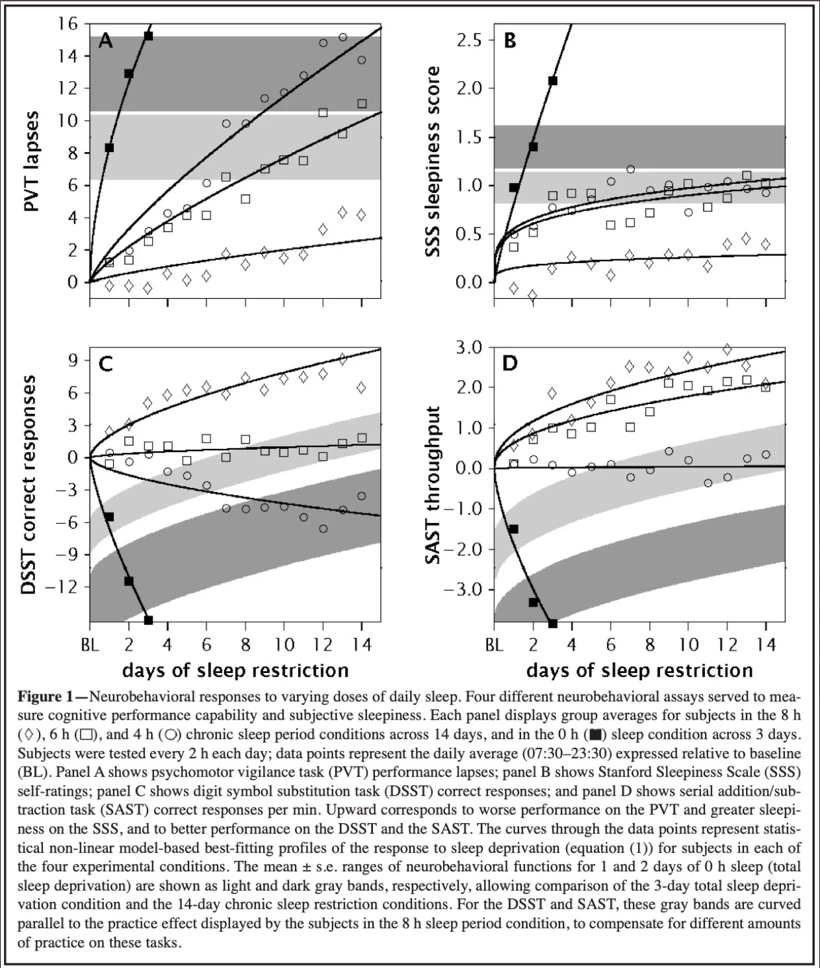
A landmark study in the field of sleep science, published in the journal Sleep in 2003, measured the effects of chronic sleep restriction under laboratory conditions. In the study, healthy adults were divided into three groups over the course of 14 days: those who slept 8 hours a night, those who slept 6 hours, and those who slept 4 hours. A comparison group that was kept completely sleep-deprived was also included. Participants’ attention, reaction time, and cognitive performance were tested at regular intervals.
6 HOURS OF SLEEP HAS AN ‘ALL-NIGHTER’ EFFECT
The results of the study were striking. Over the course of two weeks, the performance of the group that slept 6 hours a night declined to a level comparable to that of people who had stayed awake continuously for 24 hours. The performance of the group that slept 4 hours dropped to a level comparable to individuals who had gone without sleep for 48 hours.
The most notable finding, however, was participants’ subjective perception of fatigue. Although the subjects stopped feeling more tired after a few days, objective testing showed that cognitive performance continued to decline. In other words, people were not noticing their own worsening performance.
The study revealed that chronic sleep restriction can be just as damaging as short-term sleep deprivation, and that this is often not perceived subjectively.
THE DURATION AND QUALITY OF SLEEP
The debate over sleep duration is not confined to academic publications alone. In his book ‘I Can’t Sleep,’ Prof. Dr. Hüseyin Nazlikul states that, for a healthy life, an adult should sleep an average of 8 hours a day. Emphasizing that sleep needs can vary depending on genetic factors, age, season, and occupation, Nazlikul draws attention to the importance of sleep quality over sleep duration.
According to Nazlikul, the time it takes to fall asleep, nighttime awakenings, and the continuity of sleep are decisive factors in waking up rested. Noting that REM sleep plays a critical role in emotional balance, Nazlikul recommends a dark environment, regular sleep hours, and a bedroom free of electronic devices for quality sleep.
WHAT DOES THE SCIENTIFIC EVIDENCE SAY
Current scientific consensus indicates that the vast majority of adults need 7-9 hours of sleep. Experimental studies, meanwhile, point out that sleep fixed at around 6 hours in particular can create a cumulative cost on attention, reaction time, and working memory.
Although sleep duration varies from person to person, research shows that the effects of chronic deficiency on performance do not disappear even when it starts to feel normal.
As discussions of rising burnout and mental fog continue, this experimental data published 23 years ago serves as a fresh reminder that sleep is a biological necessity: routine and quality matter as much as duration, but the cost of chronic deficiency often accumulates silently.
Odatv.com