


Acid-Base Balance Acid-base balance refers to the balance of hydrogen ion concentration in body fluids.

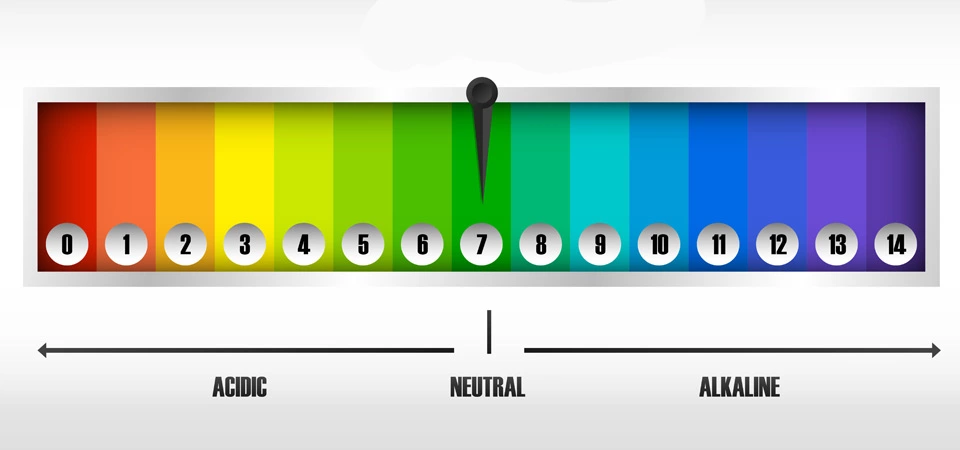
Although body fluids contain only a very small amount of hydrogen ions, even tiny changes in concentration affect enzymatic reactions and physiological events within cells, suppressing some and accelerating others. For this reason, regulating hydrogen ion concentration is a very important part of homeostasis.
A healthy person's blood contains 36-40 nmol/L of hydrogen ions. A high hydrogen ion concentration in the body is called acidosis, and a low hydrogen ion concentration is called alkalosis.
The pH value of blood is 7.4 — that is, slightly alkaline — and this value can range between 7.35 and 7.45. As a result of metabolic activity in our body, acid levels rise, but they need to return to normal levels again after a certain amount of time.
As is well known, salt is made up of two elements called sodium and chloride. Minerals with alkaline properties, such as sodium, potassium, calcium and magnesium, play an important role in maintaining the acid-base balance of the blood.
 If a person eats excessive amounts of meat, cheese, and sweets, and smokes and consumes alcohol and black tea, the pH value of their blood becomes acidic, because these foods increase acidity.
The pH value in the intestines should be between 5 and 7. In other words, the environment should be slightly acidic. This is because lactic acid bacteria, one of the most important and beneficial bacteria of the gut flora, can only survive in this environment. The bacteria that make up the gut flora break down fibrous foods and convert them into fatty acids. This is very important for human health. The gut flora also produces important vitamins such as B12 and K2. If a person doesn't consume fibrous foods (vegetables, fruit and whole grain flour products), vitamin deficiency occurs.
Irregularities and changes in the gut flora negatively affect human health. If toxic gas in the intestines cannot be expelled, it mixes with digestive secretions and causes poisoning. This is actually the root cause of the toxin buildup in the body that has been talked about so much in recent years.
The pH of the heart muscles should be 6.9 — that is, very slightly acidic; if this value drops below 6.5, a heart attack occurs.
Among the tissues where the acid ratio in the body increases the most are connective tissue and lymph nodes. As acids are converted into acidic salts, swelling occurs in the lymph nodes. Examining these tissues makes it possible to obtain comprehensive information about a person's toxin load. This is achieved not only through laboratory tests, but also, today, through quantum physics, whose working mechanism is now better understood. Measurements such as kinesiological examination, Voll's electroacupuncture, and Reviquant make it possible to more easily obtain reliable information.
Due to the acidosis that excessively increased acids create in the body, fungi (candida), particularly intestinal fungi, proliferate. It is thought that the proportional increase in fungal counts in the intestines is a cause of many chronic diseases seen in people living in developed countries.
Ammonia, aflatoxin and aldehydes proliferate along with acidosis, and these damage the entire body, particularly the liver and brain.
 Due to acidosis, disorders occur in peripheral blood circulation and lymphatic circulation, which can result in varicose veins, lymphatic circulation disorders, and hemorrhoids. From this perspective, in diseases involving circulatory disorders, attention should also be paid to the excess acid accumulated in the body.
Foods containing sugar are converted into acid as a result of metabolic changes. The body tries to eliminate these acids, and if it fails to do so, it converts them into toxins and stores them in connective tissue.
Excess fats, particularly those obtained from consuming animal-based foods, are converted into acetic acid, which is then converted into acetic acid salt. Proteins in meat products, on the other hand, are first converted into uric acid, then into uric acid salt, and stored.
Shortness of breath occurs due to acidosis, because difficulties arise in the ability of red blood cells to carry oxygen and in the capillaries' ability to perform their function.
If there is also protein in the blood along with acidosis, blood flow slows down; the excess of waste products causes the blood to thicken, which in turn impairs oxygenation at the organ and cellular level.
Since the minerals used to neutralize toxins are drawn from hair, nails and bones, bone density decreases, nails become brittle, and hair falls out.
Toxins that settle in connective tissue block the lymphatic system, causing hardening in the affected area and swelling in the skin; it is now known that the cellulite that forms on the legs results from this toxin buildup. In this regard, the vegetative nervous system, which surrounds the lymphatic system like a network, has very important functions. Neural therapy has a very significant role to play in resolving and treating this problem.
Due to acidosis, needle-shaped acid crystals form, and these crystals damage cartilage tissue; as a result, the joints become deformed. In addition, the discs cannot be nourished, resulting in a herniated disc. Acid crystals can also pierce nerve cells, causing neural pain.
THE RELATIONSHIP BETWEEN ACIDOSIS AND DISEASE
Looking at it broadly, the damage and diseases caused by acidification in the body become easier to understand. Today, the effect of acidification on disease is much better understood. Some diseases are typical diseases caused by acidification.
 Rheumatism is a disease of acidosis. Yes, you read that correctly; today we know that acids accumulated in the body underlie many rheumatic diseases. In people who consume animal protein, particularly meat and cheese, excessive amounts of uric acid have been found to form, and this can also be measured through laboratory data.
A large amount of alkaline elements is needed to convert the increased uric acid in the blood into acidic salts. Among the leading alkaline elements are sodium, potassium, calcium, fluorine, chlorine and magnesium.
The uric acid that forms is converted into uric acid crystals and stored. The kidneys excrete a certain amount of uric acid through urine. If protein intake — particularly from animal-based foods — continues, or if tooth decay has formed, the kidneys cannot excrete these crystals. These formations that cannot be excreted from the body are then converted into uric acid salt and stored. These crystals settle primarily in connective tissue and cartilage tissue, causing the rheumatic pain we know to occur in joints and soft tissues.
 Animal-based foods, such as cheese, meat and meat products, cause an increase in H+ (hydrogen) and C+ (carbon) ions in our body. O2 (oxygen) ions are needed to neutralize this, and as a result, H2CO3 (carbonic acid) forms. Excessive elevation of H2CO3 leads to acidification of the blood, which poses a serious danger. The H2CO3 that forms is excreted through H2O (water) — that is, through the urinary tract — while CO2 (carbon dioxide) is excreted through the respiratory tract. Meat itself is not actually very acidic, but the body processes it and acidifies it, and during this process, acid begins to accumulate in our body. To stop this acidification, the brain orders the lungs to slow down oxygen intake. As oxygen intake slows, cells cannot be properly nourished, and the person becomes tired quickly. This fatigue is not relieved by sleep. To solve the problem, the consumption of animal-based food should be reduced.
Due to a weakened or inflamed stomach, quality and sufficient sodium bicarbonate cannot be produced. This leads to a deficiency of sodium bicarbonate — the most important factor preventing the body from becoming acidic — and thus to acidosis. Acidosis results in many diseases, including heart and circulatory disorders, indigestion, excessive gas formation in the intestines, constipation, rheumatic and other inflammatory diseases, gout, diabetes and cancer.
The pancreas neutralizes stomach acid with the sodium bicarbonate it secretes. If there is pancreatic insufficiency, sufficient enzymes cannot be produced, and the acid-base balance in the blood can be disrupted.
As mentioned above, the disruption of the acid-base balance is one of the leading factors that facilitates the emergence of many diseases.
Among these diseases are allergic diseases, infectious diseases, chronic fatigue, herniated discs, muscle and joint disorders, high blood pressure and gastrointestinal disorders. For this reason, it is necessary to consume mainly alkaline foods. Among the leading such foods are vegetables and whole grains.
If, due to poor diet, the pH value of the intestines rises to 7 (neutral) or slightly above, the ammonium (NH+) that forms during the digestion of food is converted into ammonia (NH3). Since ammonia has neither a positive nor a negative charge — that is, it is neutral — it easily seeps into cells and from there enters the bloodstream.
The liver tries to neutralize the ammonia in the blood, along with biogenic amines and the toxic gases and alcohols secreted by microorganisms. During this process, the liver becomes fatigued due to the increased burden placed on it and cannot properly carry out its primary function of producing enzymes. A liver that cannot perform its active function facilitates the development of various diseases. If this situation persists for a long time, it causes the gut flora to deteriorate and produces even more waste products. The inability to break this vicious cycle causes many chronic diseases to emerge.
Disruption of the gut flora paves the way for many diseases, including skin conditions, allergies, rheumatic diseases, migraines, high blood pressure, stress and sleep disorders. Ammonia is a dangerous toxin for cells, while ammonium has properties that cleanse the intestinal mucosa.
 Another factor causing gastrointestinal insufficiency is the consumption of fast food, canned goods, chocolate, sugary drinks, lemonade, cola, fanta and foods containing excessive additives, along with the careless use of various chemical medications. Among these medications, the most dangerous are antibiotics, which damage the gut flora and stomach mucosa. Gastritis develops very easily in these people. As the gut flora is disrupted and inflamed, the fungi we call candida begin to invade the space vacated by the declining beneficial bacteria. As a result, the stomach cannot secrete enough intrinsic factor, and the fungi in the intestines continuously produce mycotoxins (fungal poisons).
Intrinsic factor secreted by the stomach enables the intestines to absorb vitamin B12, folic acid, methionine, and minerals. In short, intrinsic factor is as important for the digestion of food as insulin is for diabetic patients.
If intrinsic factor is not produced in sufficient quantity, vitamin and mineral deficiencies occur. This results in allergies, skin diseases, and various digestive system disorders.
To rescue the body from this acidic state, detoxification should be carried out first. It is possible to determine the level of toxins that have settled in the body using the Reviquant method. It is also useful to know the level of heavy metals present in the tissues.
One of the main ways to overcome this condition is to drink water regularly and adequately, and to place particular importance on consuming alkaline water. Regular physical activity, breathing exercises, colon hydrotherapy, neural therapy, phytotherapy and homeopathic support, healthy and balanced nutrition, quality sleep, and stress management are among the other methods we can mention.
The Relationship Between Acidity and Calcium
Toxins are acidic in nature. Acidic formations in connective tissue and blood bind to calcium. If they cannot find enough calcium in the blood and connective tissue, they take calcium from the inner walls of the blood vessels; and if they can't find it there either, they take calcium from the bones.
The loss of a certain amount of calcium from the bones may not pose a major problem. In contrast, even a very slight acidification in the blood can result in various diseases, and often even death.
Cholesterol takes the place of the calcium removed from the inner walls of blood vessels. If cholesterol continues to be added in place of the continuously decreasing calcium, the blood vessels harden and the disease we call arteriosclerosis begins to develop. As blood pressure rises, damage occurs on the inner walls of the hardened blood vessels. Sometimes the damage that occurs in the vessel wall appears as micro-tears, and cholesterol accumulates in these tears. As a result, arteriosclerosis — that is, hardening of the arteries — becomes firmly established. The hardening of blood vessels due to fat deposits means that organs such as the brain, heart, penis and vagina cannot receive enough blood. This leads to paralysis, cerebral hemorrhage, high blood pressure, impotence in men, and lack of sexual desire in women.
In patients who frequently use large amounts of chemical medication — for example, in severe cases undergoing chemotherapy — excessive cell death is observed; cell death increases uric acid in the blood. To neutralize this, the calcium in the body is used the most. For this reason, it becomes urgently necessary to replenish the depleted calcium intravenously.
Acidic drinks (lemonade, cola and sugary drinks) facilitate the excretion of calcium from the blood and bones, and often even replace it. This leads to what we call osteoporosis, or bone density loss.
Dr. Hüseyin NAZLIKUL
President of IFMANT = International Federation of Neural Therapy Associations
President of the Scientific Neural Therapy Regulation Association