


How Many Days Does Neural Therapy Take to Work? A Functional Perspective on the Vegetative Nervous…

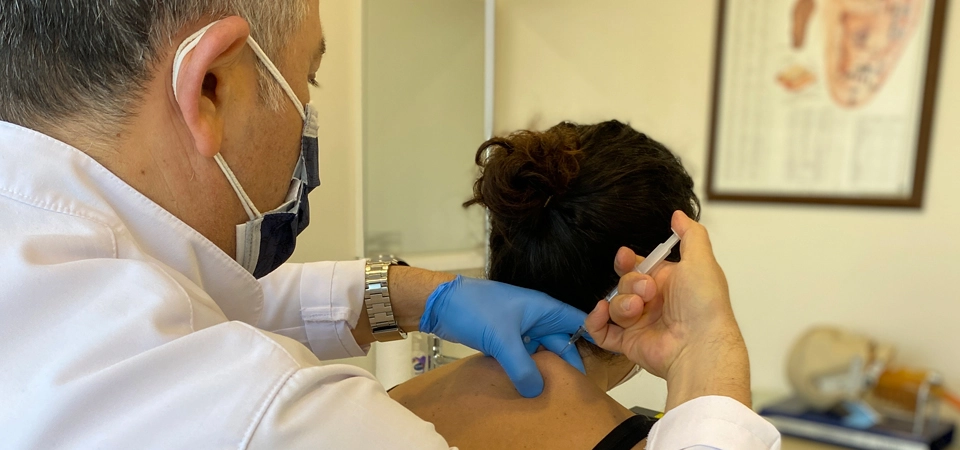
In neural therapy, the effect is achieved by injecting the medication into targeted, precisely defined tissues. This way, the sympathetic nervous system is reached—a system distributed throughout the organism that plays an important role in the rapid transmission of information within the organism's self-regulation. The effect appears just as it is injected. This effect can appear immediately, or at the latest within 72 hours.
Even simply inserting a needle into the skin, without any neurotherapeutic medication, initially produces a non-specific, acupuncture-like stimulus that is answered afferently and efferently both by the sensory nervous system, where transmission is fast, and by the sympathetic nervous system. On one hand, segmental reflex effects are triggered via the stimulus, indirectly putting the sympathetic nervous system to therapeutic use; on the other hand, by infiltrating a local anesthetic and interrupting the sympathetic conduction arc, the normalization of sympathetic function is put to direct therapeutic use.
Local anesthetic application is absolutely necessary, particularly for eliminating an interference field. This relates to the targeted stimulus inhibition accompanying the subsequent therapeutic effect, which depends on the process of normalizing sympathetic function—a process that lasts longer than the interruption of the stimulus caused by the anesthesia itself. A simple needle prick (e.g. acupuncture) or the additional administration of an analgesic substance causes segmental reflexive activation of inhibitory neurons at the targeted stimulus site. In this way, only the sympathetic dysfunction related to that particular segment's disorder is indirectly affected. Since, in a condition triggered by an interference field, the primary disorder lies outside the segment, such applications cannot directly reach the root cause of the problem.
THE EFFECT APPEARS AS SOON AS THE INJECTION IS GIVEN
Neural therapy is a treatment performed using a local anesthetic substance, either 0.5-1% procaine or 0.5% lidocaine. It means stimulating and inhibiting the sympathetic afferent and efferent fibers in order to restore normal tissue perfusion.
In this way, thanks to the normalization of the vasomotor system, the functions of the interstitium and consequently of the organs, muscles, joints, and the capsule-ligament apparatus, including the somatic nervous system, are restored to normal, and, among other benefits, the patient is relieved of pain.
The relationship of the vegetative nervous system with the brainstem and, further on, the limbic system (metabolic syndrome, psychiatric disorders) forms the basis for the possibility of treating complex disease patterns, including psychiatric disorders. By deepening our knowledge of the multi-layered functions of the vegetative nervous system in disease states as well, neural therapy fills a significant gap in classical medicine.
Meanwhile, the effects of local anesthetics beyond local anesthesia—now demonstrated by advanced international scientific findings—confirm the purely clinical surgical observations made 100 years ago.
In addition to their analgesic effect on the nerve system that transmits pain, local anesthetics also have anti-inflammatory, anti-allergic, immunomodulatory and antitumoral effects on other cell systems via the vegetative nervous system, as well as microcirculation-improving effects that are extremely important for regeneration. These properties have been proven by countless experiments and are established medical knowledge.
The terms Therapeutic Local Anesthesia and Neural Therapy are synonymous, and the second term, which emerged later historically, has over time superseded the first. The term "Therapeutic Local Anesthesia" refers to the medication used, while "Neural Therapy" refers to the vegetative nervous system, its functions and its benefits.
Although it can be used across all branches of medicine, neural therapy—most commonly used in the treatment of inflammation and pain—could be incorporated as a treatment method into internal medicine training within classical medical education. Due to its broad range of indications, neural therapy has a place in preventive medicine, in the treatment of acute and especially chronic diseases, and in rehabilitation treatment. The advantage of neural therapy as a regulation treatment lies not only in its being preferred by patients but also in its highly favorable cost-benefit-risk ratio. Neural therapy's comprehensive treatment approach makes it possible to reduce the need for medication, reduce work-loss due to illness during professional life, reduce the need for surgical interventions, end the continuous use of medication in chronic diseases, and treat multimorbid patients under a single approach.
The key point in regulation and pain treatment is the imbalance between sympathetic afferent and efferent responses. The sympathetic nervous system plays the leading role in regulating neurogenic inflammation and pain responses (nociception). The secretion of mediators that cause pain, the transmission of pain responses, the formation of the reflex arc that arises in response to pain, and the processes that initiate the inflammatory response all occur via the vegetative nervous system and the sympathetic system.
Without the sympathetic nervous system, pain does not occur. Viewed from this perspective, the importance of neural therapy and local anesthetic injections becomes even clearer. This is why knowledge of the sympathetic innervation of organs is of great benefit in achieving success in treating genuine pain.
NEURAL THERAPY
Our body is an electrical body. Through local anesthetic injections applied to specific sites, blood circulation (arterial and venous), muscle regulation, lymphatic circulation, and peripheral, central and autonomic nerve conduction are regulated. As blood circulation, i.e. perfusion, increases, the tissue is nourished; as lymphatic circulation increases, the tissue is cleared of metabolites, i.e. cleansed; and a tissue with increased, regulated nerve conduction functions more properly.
The main condition for success in therapy is an accurate diagnosis. The diagnostic approach in this process must be tailored to the individual, and the temporal relationship of the changes occurring in the person, along with their functional structure, must be taken into account. To apply neural therapy effectively, it is highly beneficial to have received the training prescribed and recognized by IFMANT. In Turkey, the only institution that provides this training in accordance with IFMANT standards is www.noralterapi.com, the Scientific Neural Therapy Regulation Association.
Neural therapy is a treatment used successfully in the management of acute and chronic diseases. In this form of treatment, the body generates a response using its own vegetative nervous system.
In neural therapy treatment, local anesthetics (usually procaine) are applied to precisely defined regions of the body, aiming to establish positive circulation within the body. As a result, the body begins its own self-healing process and disease symptoms start to resolve. This is why neural therapy is the most effective natural treatment option.
The core logic of neural therapy is regulation. An anatomical deficiency or a genetic disorder is not within the indications for neural therapy. Neural therapy therefore provides regulation of the structure that already exists.
THE SYMPATHETIC NERVOUS SYSTEM:
Reaction and Function—the sympathetic nervous system plays a role in the disease process in general, and particularly in pain, primarily in relation to inflammation and degeneration. The function of the sympathetic nervous system, which innervates the blood vessels, is based on the active dilation and constriction of vessels.
A large part of the sympathetic nervous system provides vasoconstriction that can lead to complete closure of blood vessels. On one hand, vessels dilate due to sympatholysis; on the other hand, the vasodilation necessary for tissue regeneration, tissue development and hyperplasia becomes possible even through the smallest stimuli.
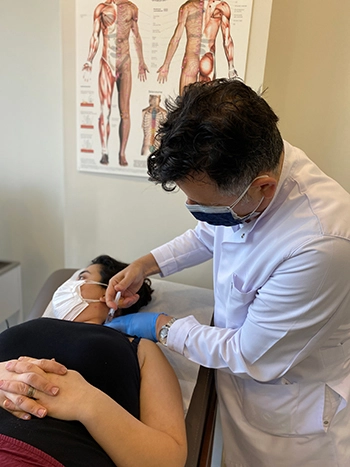 In the active vasodilation triggered via the sympathetic nervous system, acetylcholine serves as the mediator. Active vascular dilation is regarded as a parasympathetic activity, with its center indicated to be located in the pars intermedia region of the spinal cord. The autonomic nervous system is stimulated either by the organism itself or by environmental factors to which the person is exposed. The response to a stimulus depends on each individual's differing baseline state of the organism and on the intensity of the stimulus. The sensitivity of the autonomic nervous system to stimuli increases from the center toward the periphery. Unlike the somatic nervous system, an "engram" can form in the autonomic system; repeated stimuli of moderate or very high intensity continually lower the stimulus threshold. The process of stimulation and the sequence of stimuli proceed as follows: 1. Stimulus. 2. Stimulation of the sympathetic nervous system and directed transmission of the stimulus. 3. The sequence of stimuli acting on the vascular system at the terminal end of the capillaries. 4. The results of the stimulus in the specific organ. This process forms the basis of the vascular system reactions in G. Ricker's law of graduated response. The processes that occur in tissues—together with their associated set of symptoms—range from improved microcirculation to necrosis, and from cell renewal to cell death and cell dysfunction.
Therapeutic Use of the Sympathetic Nervous System
Functional characteristics of the vegetative nervous system from a diagnostic and therapeutic standpoint:
- The sympathetic nervous system is the sole information system that extends throughout the entire organism and, alongside appropriate adaptation to conditions, supports the organism as a whole. The parasympathetic nervous system has an antagonistic function both in the head and neck region and in the trunk.
- The core functions of the sympathetic nervous system:
- Regulation of blood circulation
- Control of organ systems.
- Various changes and processes in the terminal vessels depend on stimuli belonging to the perivascular sympathetic nervous system.
- It is significant that a state of stimulation in the perivascular sympathetic nervous system can persist even after a temporary and limited number of stimuli.
A single encounter with a stimulus can lead to "sensitization" of the paravascular sympathetic nervous system, subsequently lowering the stimulus threshold and intensifying the response to the stimulus when it recurs.
A very intense stimulus, or the repetition of a moderately intense stimulus, can lead to a persistent state of stimulation in the perivascular sympathetic nervous system through self-regulation. The clinical equivalent of this is chronic disease.
TREATMENT OPTION:
This sequence of stimuli can be interrupted by infiltrating the stimulated region with a local anesthetic. Just as repeated stimuli can alter the stimulation or sensitivity of the sympathetic nervous system, these changes can be reversed through repeated local anesthesia applications.
When we consider the autonomic nervous system's response to neural therapy, since the therapeutic normalization of autonomic stimulus transmission depends far more on halting pathological stimulus transmission than on the duration of the local anesthetic's effect, the goal should be to use the shortest-acting effective local anesthetic possible. A 0.5-1% solution of the ester-type procaine, free of any additives such as vasoconstrictors and preservatives, provides optimal local anesthesia.
General symptoms observed with procaine application include: mild dizziness, a general feeling of warmth, mild sweating, a metallic taste in the mouth, a feeling of "trembling," and, rarely, brief lapses in concentration or, rarely, brief disturbances of speech, vision or hearing.
Sources Used:
- Nazlikul, H: Nöralterapi Ders Kitabı
- Nazlikul, H: Nöralterapi Başka Bir Tedavi Mümkün
- H. Barop's Nöralterapi Atlası (Translated by H. Nazlikul)
- L. Fischer's Nöralterapi Kitabı (Translated by H. Nazlikul and Y. Tamam)
- James W. McNabb's Eklem ve Yumuşak Doku Enjeksiyonları (Translated by H. Nazlikul and Y. Tamam)
- Weinschenk, S: Neuraltherapie
- Fischer, L et al: Lehrbuch Integrative Schmerztherapie
- Herget, F, H, Nazlikul, H: "Neurophysiologie und Neuropharmakologie der Schmerzmatrix" p. 56 ff in Abstractband Deutscher Schmerztag 1998
- Barop, H.: Lehrbuch Neuraltherapie, 2nd Revised Edition, Haug Verlag 2015
- Fischer, L: Neuraltherapie nach Huneke 2004 HD
- Reuter URM, Oettmeier R and Nazlikul H (2017) Procaine and Procaine-Base-Infusion: A Review of the Safety and Fields of Application after Twenty Years of Use. Clin Res Open Access 4(1): doi http://dx.doi.org/10.16966/2469-6714.127