


How does neural therapy work? Neural therapy is a regulation treatment performed using very low…

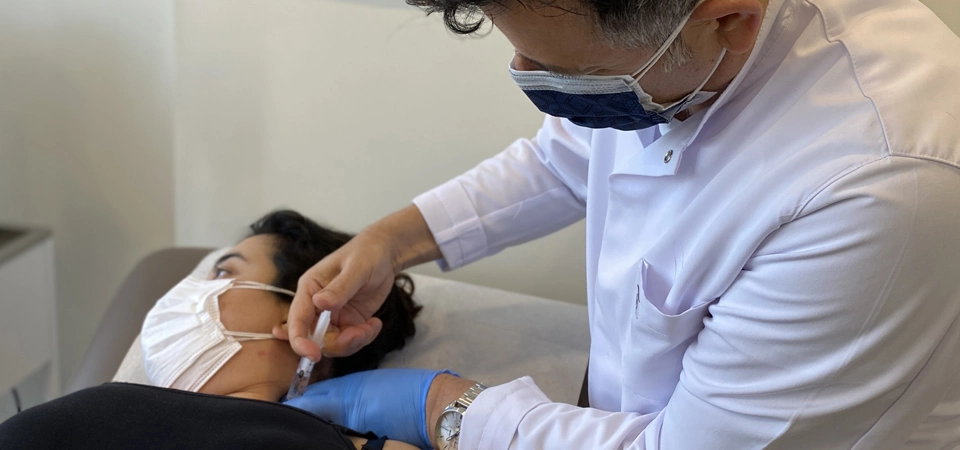
The human body is an electrical body. Our entire body is enveloped by a network reaching up to 500,000 km in length. Excitable tissues have the ability to change the electrical properties of their cell membranes in response to any stimulus, generating and transmitting an action potential. Nerve and muscle tissue are excitable tissues.
Neural therapy stimulates and regulates the vegetative (autonomic) nervous system, which forms a very extensive electrical network throughout our body. In neural therapy, local anesthetic injections applied to specific sites regulate three circulatory systems in the body: blood circulation, lymphatic circulation and nerve conduction.
As blood circulation, i.e. perfusion, of a tissue increases, the tissue is nourished; as lymphatic circulation increases, the tissue is cleared of metabolites, i.e. cleansed; and a tissue with increased, regulated nerve conduction functions more properly.
Consequently, the self-healing capacity of a tissue that is nourished, cleansed and receiving regulated commands increases.
What Is Neural Therapy?
Neural therapy is a treatment method used in the management of acute and chronic diseases, and local anesthetics are used in this treatment. Procaine or lidocaine is generally preferred as the local anesthetic. In this form of treatment, the body generates a response using its own vegetative/autonomic nervous system. Through the injection of local anesthetics, the body heals itself in a natural way.
In neural therapy treatment, local anesthetics (usually procaine) are applied to precisely defined regions of the body, aiming to establish positive circulation within the body. As a result, the body begins its own self-healing process and disease symptoms start to resolve. This is why neural therapy is the most effective natural treatment option.
The core logic of neural therapy is regulation. An anatomical deficiency or a genetic disorder is not within the indications for neural therapy. Neural therapy therefore provides regulation of the structure that already exists.
Segment Therapy
According to segment theory, specific skin regions are connected via nerve-reflex pathways to specific internal organs. Stimuli applied to the target skin region provide positive regulation in the affected organ and trigger the onset of the organ's own self-healing process. Segment therapy is achieved through the direct injection and infiltration of local anesthetics into the skin surface. A brief reaction may occur on the skin.
Segment therapy can also be applied to muscles, as well as via intravenous and intra-arterial injections to nerves and ganglia. Procaine contributes to circulation and exhibits an anti-inflammatory effect. If this form of neural therapy does not provide benefit, treatment of the interference field is pursued.
Interference Field Therapy
In neural therapy, treatment approaches vary according to the type of pain. Pain can be exacerbated by damage in interference fields. These chronic pains spread throughout the entire organism via the vegetative nervous system and block the healing process. Interference fields arise as a result of various inflammations and generate impulses. These impulses can lead to pain or a chronic condition in the affected segments or in other organs. Commonly known interference fields include damaged teeth, long-open wounds and similar issues. This process is brought to an end through the injection of local anesthetics. Another successful method within neural therapy is interference field therapy. Local anesthetics achieve healing in the interference field and eliminate the blockage in the body.
When and in Which Conditions Do These Treatments Help?
In modern regulation medicine, neural therapy affects the entire circulatory system within the organism: it has effects on the nervous, hormonal, muscular, circulatory and lymphatic systems. It also has effects on the skeletal system, the digestive system and the excretory system. For this reason, this treatment option has a wide range of applications. Because neural therapy contributes to circulation and removes blockages that have formed within the organism, it is successful not only in acute conditions but also in the treatment of chronic conditions. Neural therapy methods help resolve various types of pain, allergies and disorders of internal organs.
Sample Indications:
- Headache, migraine
- Allergies, asthma and colds
- Sleep disorders
- Acute and chronic pain
- Circulatory disorders
- Eye diseases
- Ear disorders and tinnitus
- Gynecological disorders
- Heart disorders
- Thyroid gland disorders
- Disorders of internal organs (e.g. liver, gallbladder, stomach, intestines)
- All types of arthrosis and arthritis
- Neurological diseases
- Diabetes, high blood pressure
- Nerve disorders
- Bladder disorders and prostate conditions, among others.
"Dr. Hüseyin Nazlikul is one of only 4 scientists who, as an instructor for both the Neural Therapy Association in Turkey and IGNH, has served as a Trainer of Trainers within IGNH since 1996. He is the president of the Scientific Neural Therapy and Regulation Association in Turkey and of the International Federation of Medical Associations for Neural Therapy (IFMANT). In May 2008, he was awarded the Huneke Medal for his work in neural therapy."
Dr. Hüseyin NAZLIKUL
IFMANT = President of the International Federation of Medical Associations for Neural Therapy
President of the Scientific Neural Therapy Regulation Association
Sources Used:
• Nazlikul, H: Nöralterapi Ders Kitabı
• Nazlikul, H: Nöralterapi Başka Bir Tedavi Mümkün
• H. Barop's Nöralterapi Atlası (Translated by H. Nazlikul)
• L. Fischer's Nöralterapi Kitabı (Translated by H. Nazlikul and Y. Tamam)
• James W. McNabb's Eklem ve Yumuşak Doku Enjeksiyonları (Translated by H. Nazlikul and Y. Tamam)
• Weinschenk, S: Neuraltherapie
• Fischer, L et: Lehrbuch Integrative Schmerztherapie