


A Neural Therapy Solution for Heel Spur (Plantar Fasciitis) A heel spur generally presents, in a…

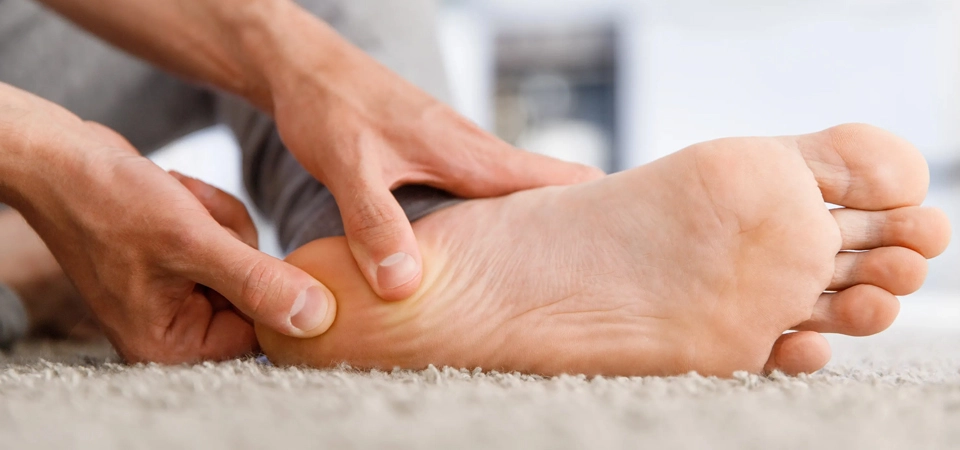
It is characterized by pain on the medial side of the heel on the plantar surface of the foot. Severe pain occurs during the first few steps taken upon getting out of bed in the morning or standing up from a sitting position. The pain decreases with walking. It increases with prolonged standing and excessive walking.
It can be confused with Achilles tendinitis, retrocalcaneal bursitis, stress fracture of the calcaneus, subtalar joint arthritis, Reiter's syndrome, and seronegative reactive arthropathies.
NEURAL THERAPY
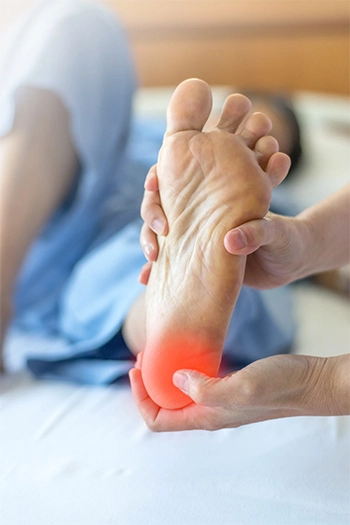 Local Treatment: Applying 1.1 cc of 1% lidocaine to the attachment site of the plantar fascia on the calcaneus and to the metatarsal attachment sites, and searching for trigger points in the muscles of the sole of the foot, is important. The presence of trigger points in the abductor hallucis brevis, abductor digiti minimi, quadratus plantaris, and flexor digitorum brevis muscles causes the plantar fascia to harden and become painful over time. Treating the trigger points makes an important contribution to the treatment of plantar fasciitis. .
Segmental Treatment: In classical school medicine, our medical applications are also generally local in local problems. With this approach, the success rates are not very high. All local events emerge as the final endpoint of problems within the system. It is important for treatment to perform segmental application after the local application, so that this local effect is integrated with the system. A quaddle is applied between L1-S5. L2 block and/or a sacral canal application is performed.
Interference Field Treatment: In local events affecting a single extremity, there is often a significant interference field and a chronic irritation. A kinesiological approach is important in investigating interference fields. Whether any scar tissue, fracture sequela, or organ pathology is an interference field can be understood through kinesiological tests, as well as through the phenomena that emerge after neural therapy is performed.
Combination: For patients who still do not respond despite this, Manual Therapy, Magnetic Field Therapy, Acupuncture, and Homeopathic support are applied.
Ozone applications can be local or in the form of bagging. Personally, I have not been able to observe the expected effect with ozone. In this case, increasing blood flow to the region and removing the breakdown products that have formed in that region is very important for the most effective therapy.
Sources Consulted:
• Nazlikul, H: Nöralterapi Ders Kitabı
• Nazlikul, H: Nöralterapi Başka Bir Tedavi Mümkün
• H. Barop's Nöralterapi Atlası (Translator: H. Nazlikul)
• L. Fischer's Nöralterapi Kitabı (Translators: H. Nazlikul and Y. Tamam)
• James W. NcNabb, Eklem ve Yumuşak Doku Enjeksiyonları (Translators: H. Nazlikul and Y. Tamam)
• Weinschenk, S: Neuraltherapie
• Fıscher, L et al: Lehrbuch Integrative Schmerztherapie