

What Is the Place of Neural Therapy, Regulation Treatment, and Complementary Medicine in Turkey?…
The importance of regulation therapy, also known as complementary medicine, has grown worldwide. In particular, the trend toward these methods among an informed group of patients and individuals of higher socio-cultural standing has been pioneering this development.
In parallel, interest in complementary medicine among young physicians is increasing day by day. This trend is seen especially in Europe, where complementary medicine departments are being established one after another. However, although complementary medicine has gained momentum in our country as well, with GETAT (Traditional and Complementary Medicine), it has not yet reached the place it deserves.
Complementary medicine evaluates illness together with the genetic, social, environmental, and occupational factors that give rise to it, along with other organic and functional changes affected by the disorder in that organ, and the psychological and mental differentiations these create.
In recent years, modern medicine has begun to focus more on the physical side of the person. The work of medicine has multiplied and intensified. Modern medicine has begun to pay insufficient attention to people's needs aimed at social, spiritual, and physical unity.
Modern medicine has sent some patients home into the arms of helplessness, saying "There is nothing we can do." All of this has begun to redirect patients back toward complementary medicine, which helps produce solutions. We believe that modern medicine's need for complementary medicine will be, more than anything, at the point of collaboration.
Today in modern medicine, a doctor who explains the surgery they will perform to the patient in detail, discusses the treatment they will apply with the patient, and tells the patient about the side effects of the medication they will give is defined as a "good doctor," and the hospitals where these doctors work are defined as "good hospitals." Complementary medicine gives people time, talks to them, touches them, and listens to them. It keeps the person from being treated as an object and underscores that they matter as an individual.
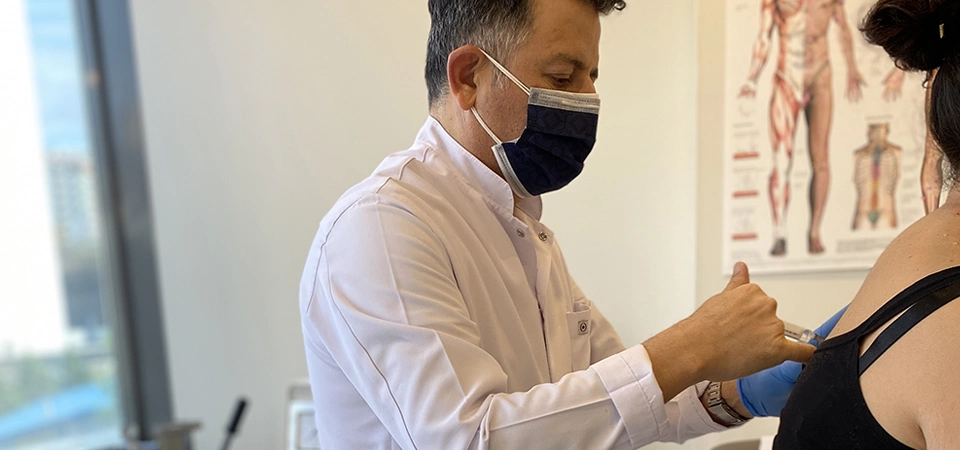
For example, in modern medicine, a patient is treated surgically and given medication. However, no psychological assessment is made. Complementary Medicine, on the other hand, operates with a holistic, spiritual, and motivational outlook through methods such as neural therapy, massage, acupuncture, phytotherapy, nutrition, speech, music, scent, and sound, which are what make a person human and keep them happy. It can accelerate the body's physiological healing mechanisms and help the person achieve a sense of well-being. In fact, this shows just how much modern medicine struggles to meet the patient's most natural expectations.
Today, a struggle is being waged in complementary medicine to once again approach the person from a holistic perspective.
 One reason complementary medicine is so much in demand is that it is a reaction to medicine becoming industrialized. Because modern medicine views the person as an industrial product. That is, the patient enters the hospital as a human being, as raw material, and after being treated, comes out as a product.
The element of being human is not given much priority in these product processes. In fact, once the patient is sent home, no further attention is given to them at all. This gap is being addressed through alternative or complementary medicine.
Complementary medicine says, "We are with you at home too, by your side too. If you are without options, come to us. We will listen to you. We will show you a remedy from nature," and this is a correct approach. Because there is a remedy in nature.
In addition, people's growing fear of environmental and natural life pollution, the increasing use of toxic chemicals, and the side effects caused by medications are also driving them toward complementary medicine.
As living standards rise around the world, certain harmful and dangerous substances also emerge during production. This creates dangerous situations for the environment and human health.
This is, in fact, the result of a natural process. At first, people wanted everything to be mechanized. Then they realized this made them unhappier. Perhaps they earn more money and live comfortably, but they are not happy.
Today, people have begun to question things like, "Why am I taking medication?", "I don't want to use chemical drugs to lower my fever and cure the infection...", and even, "If possible, let me turn to natural preventive methods so I don't catch the infection in the first place..." These questions have revealed the need for complementary medicine. Because modern medicine had stopped concerning itself with nature. Over the last 50 years, modern medicine had turned toward unnatural, industrially produced methods that bring in more revenue.
We believe that behind the insufficient attention given to complementary medicine in our country lies the pharmaceutical industry and the struggle over profit. Today, complementary medicine and modern medicine stand as if they were two opposing poles. Yet both should complement each other and act together. In areas where modern medicine, under the light of science, cannot spare the time or attention, it is necessary to make use of complementary medicine. In chronic diseases that are long-lasting and not curable, it is possible to benefit from complementary medicine through more humane methods.
It is possible to help the patient with complementary medicine especially in improving their environment, providing a sense of well-being, and helping them feel good—that is, in matters concerning the inner world beyond physical health. There is no harm at all in placing the medications of modern medicine alongside our complementary medicine treatment tools.
Dr. Hüseyin NAZLIKUL
IFMANT = President of the International Federation of Medical Associations for Neural Therapy
President of the Scientific Neural Therapy Regulation Association
Sources I Benefited From:
• Nazlikul, H: Neural Therapy Textbook
• Nazlikul, H: Neural Therapy—Another Treatment Is Possible
• H. Barop's Neural Therapy Atlas (Translator H. Nazlikul)
• L. Fischer's Neural Therapy Book (Translators H. Nazlikul and Y. Tamam)
• James W. McNabb's Joint and Soft Tissue Injections (Translators H. Nazlikul and Y. Tamam)
• Weinschenk, S: Neuraltherapie
• Fischer, L et al: Lehrbuch Integrative Schmerztherapie