


Topic: The far right and Germany... The country's fate is in the hands of immigrants
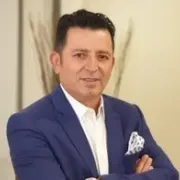
As immigrants living in Germany, we have the power to shape both our own future and Germany's future. Today, we have a historic responsibility to stop the rising wave of the far right and to protect a multicultural, democratic Germany. This is in our hands!
As Germans of immigrant origin, we should have greater motivation in this election. Because we are protecting not only our individual rights, but also the rights and opportunities of future generations. We are the guarantee of Germany's pluralistic, social, and democratic structure.
THE SPD'S ROLE IN MULTICULTURAL GERMANY
The party that laid the foundations of social justice, equality, and a multicultural society in Germany has been the SPD. This line, which began with Willy Brandt, continued with Helmut Schmidt, and continues today under the leadership of Olaf Scholz, has formed the cornerstones of Germany's social cohesion and welfare state.
The SPD has always advocated for the integration of immigrants into society, their education and job security, and their possession of equal rights. For the strengthening of multicultural Germany and the protection of democratic values, the SPD needs to be strong.
THE SPD'S INDEPENDENT IDENTITY AND ITS FUTURE VISION WITH IMMIGRANT COMMUNITIES
The SPD's deep-rooted history in German politics and its social-democratic identity have made it not just a party, but a powerful movement advocating for social equality and justice. However, in today's political atmosphere, the SPD needs to more clearly establish its own independent identity and produce concrete solutions.
In an increasingly digitalized world, campaigns and media work have become a critical tool for conveying the SPD's core values to broad masses. In particular, the contributions of Turkish-origin and other immigrant communities to Germany's economic and social structure should be emphasized more strongly, and it should be explained that they are not merely a labor force, but a valuable part of society with equal rights.
Young voters are a decisive group in terms of the SPD's future and the sustainability of social democracy. Issues that directly concern young people, such as education, employment, and climate change, should be at the center of the SPD's policies. The growing economic crisis, the rise in cost of living, and social inequalities are priority issues requiring concrete solutions, especially for low-income groups and the working class. The SPD should develop clear policies that will protect the living standards of these groups through fair tax policies, economic support packages, and reforms that increase job security.
Immigration policies are one of the most important elements that strengthen Germany's multicultural structure and ensure social integration. The SPD should stand out with concrete proposals that will ensure immigrants have better conditions in education, health, and job security.
Removing the structural obstacles faced by immigrants, increasing vocational training opportunities, and ensuring equal access to healthcare services are fundamental steps that will strengthen social cohesion. Presenting the SPD's policies on this issue strongly will both increase trust in the party and put Germany's goal of preserving its welfare-state structure on more solid ground.
ALL COMMUNICATIONS OF CDU CHAIRMAN FRIEDRICH MERZ WITH THE AFD MUST BE CLEAR
Ahead of the upcoming elections in Germany, CDU Chairman Friedrich Merz's attempt to make contact with the AfD shows that he has not sufficiently grasped the importance of the political legacy left by Merkel. Angela Merkel maintained center-right politics for years along a moderate, inclusive line, aligned with democratic values.
She kept the CDU away from the influence of the far right, positioning the party to receive the support of broad segments of society. However, Merz's recent policies reveal that he has drifted away from this legacy and is exposing the CDU to the danger of shifting further right.
The AfD is a far-right party that poses a serious threat to Germany's democratic order and social peace. It is known for its anti-immigrant, EU-skeptical rhetoric that increases social polarization. Any kind of cooperation by the CDU with such a radical party risks not only its own political future, but also Germany's democratic order. While the CDU drew a clear line between itself and the AfD during the Merkel era, Merz blurring this line is considered a major political mistake.
What Germany needs is an approach to governance that stays away from extremes, is inclusive, committed to democratic values, and prioritizes economic development. The CDU needs to continue to stay in the democratic center and uphold Merkel's legacy. Otherwise, the party may lose trust among voters while also harming Germany's stable governance. Friedrich Merz and the CDU leadership must realize that any contact with the AfD will not strengthen the CDU, but will instead weaken both the party and the democratic order in Germany in the long run.
GERMANY MUST REBUILD NEUTRALITY AND DIPLOMACY IN FOREIGN POLICY
Germany's long-standing tradition of diplomacy and balanced stance in the international arena has been seriously shaken by the foreign policy approach led by the Green Party. The current Foreign Ministry, drifting away from the principle of neutrality, is conducting a foreign policy shaped by ideological fixations and sharp polarization.
This approach has seriously damaged Germany's prestige and credibility within global diplomacy. A foreign policy approach that does not consider Germany's geopolitical responsibilities and strategic interests in international relations is increasingly putting the country in a difficult position both economically and politically.
The Green Party's management of foreign policy has dragged Germany into a position where it cannot act independently under U.S. influence. Transatlantic relations have always been important for Germany, but today's foreign policy has created a dependency that has caused Europe and Germany to lose their own strategic autonomy.
This approach, far from diplomacy and driven entirely by emotional and ideological direction, has also damaged Germany's economic interests. One of the fundamental reasons the country faces an energy crisis and contractions in foreign trade is this unplanned and narrow-minded foreign policy.
Given Germany's historic tradition of diplomacy, its ability to play an effective role in multilateral negotiations, and its capacity to manage crises, it is clear how much damage the current foreign policy approach is doing to the country. The Foreign Ministry, led by the Green Party, has transformed Germany from a major player on the international stage into a weak actor tagging along after certain blocs.
It is essential for Germany to return to a neutral, rational diplomatic approach in foreign policy that safeguards its strategic interests. This is a critical necessity not only for Germany, but also for the preservation of Europe's and global stability.
LESSONS FOR GERMANY TO LEARN FROM THE MERKEL ERA
Germany should learn from the experience it gained in foreign policy and internal balance during Angela Merkel's chancellorship. Merkel's leadership brought great prestige to Germany, especially in matters of multilateral diplomacy, crisis management, and keeping Europe together.
Under her leadership, Germany acted as a central actor of global stability, took on a mediating role in major crises, and became the economic engine of Europe. Today, at a time when Germany faces geopolitical uncertainties and economic difficulties, it should learn from this pragmatic and strategic approach of the Merkel era and avoid emotional and ideological swings.
It is not only Merkel's party, the CDU, and its ally the CSU, that need to learn these lessons, but the SPD as well.
The SPD must grasp the importance of preserving the balance and international reputation established by Merkel. While the SPD takes important steps in preserving the multicultural structure and social justice, it must not forget that this needs to be balanced with economic sustainability. During the Merkel era, the foundations that ensured Germany's socio-economic stability were strengthened by the social market economy approach and the principle of diplomatic neutrality. The SPD needs to follow a line that strengthens this legacy, rather than ideological approaches that would weaken Germany's global position after Merkel.
What Germany needs today is leadership that prioritizes the country's interests above party lines, preserves Europe's integrity, and safeguards global balances. Merkel's stable governance model and multifaceted diplomacy should be an important reference point not only for the CDU-CSU, but for the SPD as well. Germany should stop being a passive actor in the political games of great powers and display an independent stance by using multifaceted diplomacy and its economic power. The SPD learning from this historic legacy and developing a pragmatic and sustainable approach to governance will determine Germany's future position.
TURKS AND DEMOCRATIC RESPONSIBILITY IN THE ELECTION THAT WILL DETERMINE EUROPE'S FATE
In this historic election for Germany, the responsibility of the more than 1.7 million voters of Turkish origin who have become German citizens is greater than ever. As immigrants, we bear the responsibility of protecting not only our own rights, but also Germany's democratic structure, its social peace, and Europe's future. The historic alliance, cultural partnership, and economic cooperation between Turkey and Germany show how strongly these two countries are bound to each other. However, the rising wave of the far right threatens this multicultural structure and shakes Europe's core values. It is precisely for this reason that it is of vital importance for voters of Turkish origin to go to the ballot box and make their voices heard.
This election is a critical turning point that will determine not only Germany's, but Europe's overall political direction. The rise of the far right is trying to fragment Europe's social fabric with discriminatory policies targeting immigrants and ethnic and religious minorities. However, standing against this wave is the responsibility not only of native Germans, but also of immigrants who are part of European society. Turks have made great contributions to the economic, social, and cultural development of Germany and Europe for years. Today, they need to carry this contribution even further, showing that they exist powerfully not only in the economic sphere, but also on the political and intellectual plane.
This series of articles not only emphasizes how important the participation of the Turkish community in Europe in democratic processes is, but also shows how immigrants can play a major role in the European intellectual world. Defending democratic values in Europe should be a priority task not only for established populations, but also for the Turkish community, which has a deep-rooted history on this continent. Turks should be an important actor shaping Europe's future not only through labor, but also through active participation in democratic processes. In the face of the rise of the far right, acting together and standing up for democracy is our shared responsibility.
THE POWER OF DEMOCRACY: THE TRANSFORMATIVE VOICE OF PEOPLE OF IMMIGRANT ORIGIN
The course of history is shaped by the hands of brave and determined people. For people of immigrant origin living in Germany, this election is much more than just casting a vote. This is the right to determine the future of a country in which they have labored and contributed to society for years. Whoever it may be, whatever powers take the stage for whatever interests, the spirit of true democracy lies hidden in the will of the people. In the face of the maneuvers of big capital, populist leaders, or global figures, the unity and awareness that people of immigrant origin show at the ballot box will ensure that they write their fate with their own hands, not others'.
Giants of the business world like Elon Musk, or sharp political figures like Trump, may want to steer elections in line with their own ideologies. But the will of the people is a power that cannot be bought or manipulated. Immigrants in Germany are not only an economic power, but also the guarantee of social and cultural diversity. By voting, they can prove that they are a real part of this country, not merely observers but determiners. Every vote they cast at the ballot box will ensure not only their own future, but also that future generations live in a free, fair, and inclusive Germany.
Today, there is an opportunity to illuminate the shadows of the past and shape the future. This is the time to be the voice of those who are wanted to be silenced, to show the existence of those who are ignored. Whatever anyone says, whatever games whatever powers set up, it is the people themselves who give democracy its true spirit. So, in this election, people of immigrant origin will win not just a vote by going to the ballot box, but their dignity, their equality, and their future. Now is the time to act with a determination that will leave a mark on history, instead of the silence of the past!
WHAT SHOULD WE DO TO STOP THE RISE OF THE FAR RIGHT?
We all have important tasks to prevent the rise of the far right. The steps to be taken at the individual and social level in this struggle are as follows:
1. Increasing Election Participation
Let's be sure to use our right to vote and raise awareness among those around us.
Let's support awareness campaigns that will ensure immigrants actively participate in the election process. Immigrants living in Germany make up a significant portion of the population. The higher our voter turnout, the more possible it will be to protect the democratic structure.
2. Raising Awareness Against and About the Rhetoric of the Far Right
We must be careful against the far right's strategies of spreading misinformation and disinformation.
We must fight against the racist and discriminatory propaganda we hear on social media or around us by sharing accurate information. We must carry out awareness efforts that explain immigrants' economic, social, and cultural contributions to Germany.
3. Raising Awareness Among Young Voters
Young voters are one of the most important groups that will determine the future. Encouraging their participation in the election process is a critical step for protecting immigrant rights. We must raise awareness through issues that directly concern young people, such as education, employment, and climate change. Seminars and workshops against the danger of the far right should be organized in universities, vocational schools, and youth communities.
4. Taking an Active Role on Social Media and in Society
We must use media and digital platforms effectively to prevent the far right from gaining strength.
We must participate in campaigns that support multiculturalism, tolerance, and social unity. We must raise our voices against hate speech and xenophobia.
5. Working for a Democratic and Multicultural Germany
By cooperating with unions, civil society organizations, and human rights organizations, we can more strongly defend immigrant rights. We must communicate with policymakers at the local and federal level and demand the strengthening of policies that will protect immigrants' rights. By working together with parties that support multiculturalism, like the SPD, we can build a stronger society.
What Can We Do?
Let's take an active role in the election process!
Let's use our right to vote and raise awareness among those around us!
Let's raise our voices against the rise of the far right!
Let's encourage the participation of young voters!
Let's be active on social media and in communities and stand against misinformation!
Let's work together with unions and civil society organizations to protect democratic values!
Let's protect Germany's democratic and social structure!