


Testing and treating Candida Albicans yeast fungus - The saliva test for detecting Candida, used by…


It is possible for individuals to test for Candida themselves with a simple test:
A tongue that is constantly coated white can be a strong indicator of a Candida infection.
Candida patients usually see an almost snow-white, thin, and somewhat slimy layer on their tongue after waking up in the morning.
You can find out whether you have Candida with a simple morning saliva test.
How the Test Is Performed: Fill a glass with fresh tap water and drop some of your first saliva of the morning into the glass. The saliva should float on the surface. If, after a few minutes to an hour, individual strands form beneath the floating saliva, the test is positive.
 |
||
| Stringy appearance | Floating particles | Saliva sinking and increasing |
If there are fibers sinking downward in strands, add a sugar cube or an equivalent amount of powdered sugar to the water. You will see the fungus multiply enormously.
This is the same way the fungus behaves in the intestine, and it produces a deadly result as Candida invades the intestine and creates holes in the intestinal wall. Candida multiplies rapidly with refined carbohydrates, refined sugar, and alcohol.
However, the test is not scientifically accurate and has many sources of error. This test alone determines whether you have Candida with only about 60% accuracy. If a medication has been used, and it was taken the day before, its effect may be absent or delayed. Even mild dehydration in the body can also produce a false result.
Self-Administered Saliva Test
Industrial sugar and flour consumption supports the development of Candida, an extremely troublesome fungus, as it is a very stubborn fungus that usually settles in the throat and intestines.
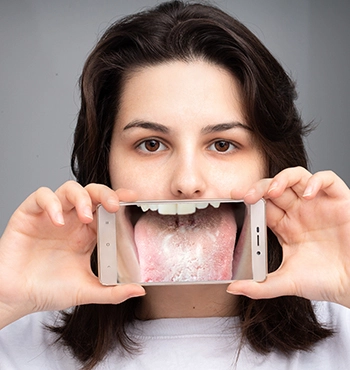 A thicker white-yellow coating appearing on most of the body of the tongue in the mornings is suspicious. If this persists throughout the day, it can be seen as an almost certain sign that something is wrong.
With an easy-to-perform saliva test, you can determine relatively reliably whether your organism has been exposed to excessive stress and, as a result, possibly to Candida Albicans. If the saliva test is positive, you must change your diet as soon as possible!
The yeast fungus we know as Candida Albicans is more common than you think!
Antibiotics kill the symbiotic gut bacteria important for defense against fungal infections, along with bacteria that are harmful to us. Even conventional medical doctors are now beginning to prescribe gut flora agents in addition to antibiotics. However, a much more problematic and much less known fact is that most cheese, meat, and many other foods contain antibiotics that continuously disrupt the gut flora. The fungus is the main beneficiary in this situation, and this fact explains why more and more people are being affected by fungal infections, and especially by Candida Albicans.
Budding fungi can also be detected in the microbial oral flora of approximately 70% of all healthy individuals, and almost consistently in denture wearers, with Candida Albicans being the most commonly found fungus among them as well. A positive detection in the mouth does not necessarily indicate a disease state, because our natural oral flora contains many different microbes. The quantity of the microbe makes the difference.
However, if the ecosystem of the oral flora is imbalanced, this altered environment can, for example, cause fungi to proliferate, and they can then take over, resulting in oral thrush. Fungi are part of many foods that are a major source of infection.
Self-Administered Saliva Test
As soon as you wake up, spit into a still glass filled with water at a temperature between body temperature and room temperature. Now watch what happens over the next hour. The saliva should initially float on the surface.
- Do long strands extend down into the water?
- Do cloudy particles drift in the water?
- Does cloudy-looking saliva accumulate at the bottom of the glass?
|
||
| Stringy appearance | Floating particles | Saliva sinking and increasing |
The thicker and faster the strands are, the faster the saliva sinks, and the more pronounced your result.
If there are no strands and the saliva is still floating on the surface of the water after an hour, you have probably had little to no exposure to Candida.
Risk factors that can lead to yeast fungus include all processes in the organism that alter the body's environment and/or reduce the body's defenses.
Factors That Lead to the Proliferation of Intestinal Fungus:
- Frequent antibiotic use
- Long-term birth control pill use
- Accumulation of heavy metals and toxic substances in the body (smoking, spending long periods in smoky environments; polluted air also increases heavy metal accumulation in the body)
- Drinking chlorinated water, using anti-inflammatory medications such as cortisone
- Frequent consumption of refined carbohydrates and sugary foods
- Excessive alcohol consumption
One reason saliva can be slimy and sticky is that the mouth is very dry in the morning. This also causes dehydration, making saliva thicker, slimier, and more fibrous.
Allergies, environmental toxins, and cold water can also cause saliva to thicken.
Other causes can include bacterial or viral infection, mold, or parasitic infestation.
Clear Evidence of Candida
 There are several ways to do this through a medical laboratory:
- Antibody test: A saliva sample can be tested for antibodies in the laboratory.
- Vegatest or HRV – analysis with Reviquant
- SFF stool analysis
- Candida testing using blood or stool samples: For this purpose, fungal cultures are created to determine whether there is a fungal infection.
- In the case of a vaginal fungal infection, a smear should be taken and examined under a microscope. In addition, particularly in cases of recurring vaginal fungal infections, fungal cultures can also be created here to detect resistant pathogenic fungi.
At-Home Candida Test
You can also perform a self-test at home to find out whether your vaginal infection is a vaginal yeast infection. For this, you can obtain an over-the-counter Candida test from a pharmacy or order one online.
Symptoms of Intestinal Fungus:
|
-Weakness, fatigue, exhaustion |
-Skin conditions such as redness and itching |
The most powerful weapon in fighting intestinal fungus is correct nutrition. For this, you should choose plant-based antifungal products that are effective against yeast fungus, primarily NTvita CandStp MCT Oil Plus capsules, along with probiotic foods and foods that will improve your gut flora. Choose quality foods to prevent vitamin and mineral deficiencies. Quality food means organic and unprocessed food.
Intestinal fungus can be treated. For this reason, foods that feed intestinal fungus should be removed from the diet, and a diet that will heal the intestines should be adopted. It should not be forgotten that intestinal fungus feeds on sugar and alcohol. Sugar does not only mean the sugar added to tea; it also includes the sugar found in honey, molasses, jam, and dried fruits.
Intestinal fungus feeds on sugar!
THINGS TO AVOID BESIDES SUGAR:
- Dried fruits
- Artificial sweeteners
- Alcohol
- Honey, molasses, jam, syrups (agave, etc.)
- White rice / Basmati
- Everything made from white flour: pasta, savory pastries, cakes, and bakery products
- Foods with additives/preservatives (highly processed)
- Moldy cheeses & cow's milk
- GMO foods
Dr. Hüseyin NAZLIKUL, M.D., PhD.
IFMANT = President of the International Federation of Neural Therapy
President of the Scientific Neural Therapy Regulation Association