

Bogotá 2026: Neural Therapy Connects People, Cultures and Medical Traditions
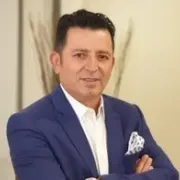
Prof. Dr. Hüseyin Nazlıkul
President of IFMANT
After these intense days in Bogotá, it is not only the lectures, workshops, and scientific discussions that remain in my memory. What stays with me even more deeply are the people, the encounters, the conversations, and that special feeling of being part of an international community united by something essential despite our different languages, cultures, and medical traditions.
From August 27 to 30, 2026, we had the privilege of participating in the IV International Congress of Neural Therapeutic Medicine in Bogotá. For me, this congress was far more than a scientific event. It was a place of encounter and, at the same time, an important moment in the shared development of Neural Therapy.
I have been involved with Neural Therapy for many decades. During this long journey, I have attended numerous congresses, had the privilege of meeting many colleagues, and witnessed the development of our method in different countries. Through these experiences, I have learned one fundamental lesson:
Neural Therapy does not live through techniques and injections alone. It lives through people, experience, the transmission of knowledge, and the willingness to learn from one another.
This was precisely the feeling I experienced in Bogotá.
Colombia: The Latin American Roots of Neural Therapy
Colombia occupies a special place in the history of Neural Therapy. The ideas and work of Julio César Payán de la Roche have influenced generations of colleagues and have given Neural Therapy in Latin America its own distinctive language and depth. His systemic understanding of the human being has also provided important impulses far beyond Colombia.
For me, it is essential not to forget this history. A medical approach that loses touch with its roots also loses part of its identity. At the same time, respect for history must never mean remaining static.
This is precisely why Bogotá was so valuable.
Different Traditions at the Same Table
Different traditions of Neural Therapy came together here. Latin American experience encountered developments from Europe, North America, and other parts of the world. Perspectives sometimes differ, terminology is not always used in the same way, and medical cultures vary considerably from one country to another.
I do not regard this as a weakness. We do not have to agree on everything in order to move forward together.
Science requires discussion. It needs different experiences and, at times, disagreement. What matters is our willingness to listen to one another and to learn from one another.
The scientific program in Bogotá demonstrated this diversity particularly well. We discussed clinical Neural Therapy, Regulatory Medicine, the autonomic nervous system, fascia, functional interrelationships, pain, and chronic disease. Workshops provided opportunities for practical work; younger colleagues presented their scientific projects; and fields such as neurofocal dentistry and veterinary Neural Therapy were also represented.
For me, this created something that cannot be taken for granted at a congress: a genuine exchange between clinical experience, practical medicine, and science.
The encounter between generations also moved me deeply. On one side were colleagues who have worked for Neural Therapy for decades and devoted a significant part of their professional lives to this field. On the other were many young physicians, dentists, researchers, and students bringing curiosity, new questions, and a desire to further develop Neural Therapy.
That gives me hope.
A Century of Experience and the Science of Today
We can and should be proud of almost a century of experience in Neural Therapy. But we must never rest on that history.
Our task is to preserve the knowledge and clinical experience of the generations before us while continuing to develop them in the light of modern medicine. Neurophysiology, research into the autonomic nervous system, Regulatory Medicine, biophysics, fascia research, and modern pain medicine now provide us with opportunities to understand and scientifically investigate many phenomena that clinicians have observed for decades.
This is also where I see one of IFMANT's central responsibilities.
IFMANT's Responsibility: Unity, Not Uniformity
As President of IFMANT, I do not envision an international organization that dictates to individual countries how they should understand or practice Neural Therapy. Rather, our responsibility must be to build bridges: between countries, between medical schools of thought, between experience and science—and above all, between people.
Naturally, we need common educational standards, quality, and patient safety. We need scientific criteria and reliable medical responsibility. And where education and quality are comparable, we should also have the courage to establish mutual recognition.
But unity must never mean uniformity. Every country brings its own history, its own medical culture, and its own experience. We should not eliminate this diversity. We should connect it.
Bogotá once again showed me that this is possible.
My Special Thanks to ACOLTEN/MNT and the Organizing Team
At this point, I would like to express my particular gratitude and appreciation to the Asociación Colombiana de Terapia Neural / Medicina Neuralterapéutica – ACOLTEN/MNT.
My sincere thanks go first to Dr. Francisco Echandía, President of ACOLTEN/MNT. Leading a scientific society while supporting the development of Neural Therapy at both national and international levels requires continuity, a strong sense of responsibility, and personal commitment. On behalf of IFMANT as well, I would like to express my appreciation for his contribution.
I would also like to extend my very special thanks to Dra. Laura Bibiana Pinilla Bonilla. As a founding member of ACOLTEN and one of the central scientific and organizational figures of this congress, she contributed with extraordinary commitment to bringing together people, scientific content, and different international perspectives. Her academic work at the Universidad Nacional de Colombia, her longstanding dedication to Neural Therapy, and her engagement within IFMANT make her an important bridge between Colombia and our international community.
My equally heartfelt thanks go to Dra. Jazmín Ariza. As a former President of ACOLTEN, a member of its Academic Committee, and a committed university lecturer, she contributed significantly to the success of this congress through her personal dedication and scientific competence. Anyone who has organized an international congress knows how much work takes place behind the scenes before everything can appear effortless to the participants.
For me, Francisco, Laura, and Jazmín also represent the many people whose commitment made this congress possible.
From my own experience, I know what it means to organize an international congress of this magnitude. Behind a few days of congress activity lie months—and often years—of preparation: countless conversations and coordination meetings, scientific decisions, organizational challenges, and, not least, an enormous investment of personal time and energy.
For this reason, my explicit thanks also go to the entire Organizing and Scientific Committee of ACOLTEN/MNT, the Universidad Nacional de Colombia, and all staff members and volunteers who contributed, whether visibly or behind the scenes, to the success of these days.
A successful international congress is never the achievement of one individual. It emerges when people share responsibility and are willing to contribute more than might ordinarily be expected of them for a common purpose.
That spirit was tangible in Bogotá.
I also thank all speakers, workshop leaders, colleagues, young researchers, and, of course, all participants, some of whom travelled great distances to reach Bogotá. Each of them gave this congress its distinctive character.
The Scientific Program in Bogotá
The scientific program in Bogotá made this diversity impressively visible. It was precisely the breadth of topics, perspectives, and personal experience that made this congress so valuable to me.
We discussed clinical Neural Therapy and Regulatory Medicine as well as the autonomic nervous system, chronic disease, pain, fascia, functional relationships, inflammation, neurofocal dentistry, and veterinary applications. Longstanding clinical experience met new scientific questions and different medical traditions.
I was particularly pleased to meet again many colleagues with whom I have shared not only a commitment to Neural Therapy but also, in some cases, many years of personal and scientific friendship.
Prof. Dr. Lorenz Fischer, through his contribution on the importance of Neural Therapy in chronic disease, once again brought his extensive clinical experience and neurophysiological-regulatory perspective to the congress. Together with Prof. Dr. David Vinyes and Prof. Dr. Laura Pinilla, he also contributed to discussions on new therapeutic concepts and the future development of our field.
Prof. Dr. Lorenz Fischer, Prof. Dr. Hüseyin Nazlıkul, Prof. Dr. Laura Pinilla, and Prof. David Vinyes provided important impulses through their workshops and reflections on the terminology of Neural Therapy. The question of how we translate our clinical experience into a contemporary medical language is, in my view, particularly important for the future international development of Neural Therapy.
I was also personally very pleased by the contributions from our Turkish group. Dr. Tijen Acarkan presented the clinical results of our work on Neural Therapy for migraine, based on an analysis of 464 cases, thereby contributing a substantial clinical dataset to the scientific discussion.
Prof. Dr. Fatma Gülçin Ural Nazlıkul presented our experience with Neural Therapy in the treatment of fibromyalgia—a condition that illustrates particularly well why chronic diseases should not be approached exclusively from a symptom-oriented perspective, but also from regulatory and systemic perspectives.
Gerasimos Papathanasiou further enriched the program with his contribution on the relationships between gastrulation, inflammation, and cancer, as well as the regulatory role of Neural Therapy. I consider such contributions particularly important because they demonstrate that the future discussion of Neural Therapy must extend far beyond injection techniques alone.
Reiner Wander, with his lecture on functional chains and Neural Therapy, introduced another important perspective and emphasized the relevance of functional and musculoskeletal interrelationships to our therapeutic thinking.
Giorgio Romani, through his contribution on hyperhidrosis and stellate ganglion techniques, demonstrated how classical Neural Therapy procedures can be connected with specific clinical questions and reconsidered in a contemporary context.
I also followed Jorge Kaczewer's contribution on fractal physiology and Neural Therapeutic Medicine with great interest. The relationship between regulation and complexity touches upon a question that has concerned me for many years: How can we understand the human organism as a dynamic, interconnected, and self-regulating biological system without reducing it to individual organs, laboratory values, or isolated symptoms?
These names, however, can only serve as examples from a much broader scientific program.
Many other colleagues from different countries and medical disciplines contributed to the success of the congress through lectures, workshops, scientific presentations, and discussions. Contributions in neurofocal dentistry, pain medicine, emotional regulatory processes, veterinary Neural Therapy, and emerging scientific explanatory models further demonstrated how broad our field has become.
I experienced precisely this diversity as a strength.
For me, the future of Neural Therapy does not depend on all of us saying the same thing. It depends on creating a dialogue between different clinical experiences and scientific perspectives.
The encounter between generations also moved me deeply. On one side were colleagues who have worked for Neural Therapy for decades and dedicated a substantial part of their professional lives to this medicine. On the other side were young physicians, dentists, researchers, and students with curiosity, new questions, and a desire to take Neural Therapy forward.
At this point, I would also like to express my special gratitude to Dr. med. Helmut Liertzer, Member of the IFMANT Board and Treasurer. His dedicated efforts in preparing and successfully conducting the IFMANT General Assembly, the responsibility he has undertaken, and his longstanding and reliable contribution to our federation are of great value to me.
Helmut also made an important contribution to the scientific program of the congress. With his characteristically educational and collegial approach, he shared with our colleagues his extensive clinical experience in the field of trigger points. Preserving knowledge is important, but generously passing it on to the next generation is equally essential for the continuity of our scientific tradition.
For this reason, I sincerely thank him both for his longstanding commitment to IFMANT and for his scientific and organizational contributions to the Bogotá Congress.
This meeting of experience and the future was, for me, one of the most beautiful moments of the congress.
This gives me hope.
Neural Therapy Belongs to No One Alone
And perhaps this is the most important experience I take home from Bogotá:
Neural Therapy belongs to no single individual.
It does not belong to one country. It does not belong to one society. It does not belong to one particular school of thought. And it does not belong to our generation alone.
We inherited it from the generations before us. For a certain period, we carry responsibility for it—and one day we will pass it on to the next generation.
The decisive question, therefore, is: What will we leave to that next generation?
I hope for a Neural Therapy that knows its roots while remaining open to new knowledge. A Neural Therapy that becomes increasingly scientific without losing its clinical experience. A medicine that thinks interdisciplinarily while never losing sight of the individual human being.
Because, at the end of every scientific discussion, what matters most to me is always the human being.
Not only the diagnosis.
Not only the pain.
Not only a laboratory value or an isolated symptom.
But the human being in his or her biological individuality, regulatory capacity, and the complex interrelationships of the organism.
For many years, this has been one of the fundamental principles of Neural Therapy for me. And this is precisely why, even after all these years, my belief in its future remains unchanged.
If we are willing to share our knowledge, remain scientifically curious, and treat one another with respect, there is still much that we can achieve together.
What Remains from Bogotá
I therefore leave Bogotá with profound gratitude. Grateful for the science. Grateful for the discussions. But above all, grateful for the people and the friendships.
Many of us live thousands of kilometers apart and speak different languages. Yet during these days, I once again felt how small the world can become when people share a common conviction and mutual respect.
For me, Bogotá was therefore not a conclusion. It was another important stage on our shared journey.
And we will continue this journey together.
With gratitude, friendship, and a profound sense of connection,
Prof. Dr. Hüseyin Nazlıkul
President of IFMANT
International Federation of Medical Associations of Neural Therapy